

Why Community Signals Are the Secret Weapon WordPress Sites Overlook
When I first built a WordPress site for a niche SaaS product, I chased the usual suspects: keywords, backlinks, page speed. The traffic rose, but the engagement plateaued. One evening, while scrolling through the comments of a rival blog, I realized something: the pages that buzzed with genuine user conversation also ranked higher in SERPs. That was the moment I started treating community interaction not as a “nice‑to‑have” add‑on, but as a core SEO asset.
In this post I’m pulling back the curtain on how you can systematically turn community signals—comments, reviews, user‑generated FAQs, and even forum‑style discussions—into measurable SEO lifts on a WordPress site. The tactics are grounded in data, but the mindset is simple: let real people write content, and then make sure Google can understand and reward that content.
1. Comments Are More Than Spam Filters
WordPress ships with a native commenting system that many site owners disable to avoid spam. Yet, each approved comment is a fresh snippet of text that Google can index. When comments contain relevant keywords, they act as long‑tail, user‑centric signals that expand the thematic breadth of a page.
- Enable moderated comments on high‑traffic, cornerstone posts. Use a reputable anti‑spam plugin (e.g., Akismet) to keep the quality high.
- Encourage depth. Pose a question at the end of your article that invites detailed responses—think “What’s your biggest challenge with X?”
- Leverage comment markup. Add
schema.org/Commentmarkup so Google can surface the conversation in rich results. If you need a quick implementation guide, our structured data playbook walks you through the exact JSON‑LD you need.
When I applied this to a product tutorial page, the comment section grew from zero to over 150 user contributions in three months, and the page’s average position leapt from 27 to 9 for several long‑tail keywords.
2. Harness User Reviews and Testimonials as Fresh Content
Reviews are gold. They’re authentic, they’re keyword‑rich, and they’re trusted by both users and search engines. WordPress makes it easy to embed reviews via plugins, but the real power lies in treating each review as a mini‑article.
Here’s a workflow that turned a modest 5‑star widget into an SEO engine:
- Collect reviews on a dedicated
/reviewspage. Use a schema‑compatible plugin that outputsReviewmarkup. - Pull individual reviews into blog posts. Write a “Case Study” post that weaves several reviews together, adding your own analysis. This creates a fresh piece of content that naturally inherits the review’s keywords.
- Cross‑link. Link from the review page back to the product page using anchor text that reflects the user’s phrasing (e.g., “I love the real‑time analytics feature”).
After implementing this strategy, one SaaS client saw a 42 % increase in organic traffic to their pricing page, driven largely by the new review‑derived posts ranking for buyer‑intent queries.
3. Build a Community‑Driven Knowledge Base
FAQs and troubleshooting guides are SEO staples, but the best ones are born from real questions. Turn your support tickets, forum threads, or Slack channel questions into canonical knowledge articles on WordPress.
Steps to operationalize this:
- Export common questions. Pull the top 50 questions from your support inbox each month.
- Structure with custom post types. Use a
knowledge_basecustom post type (yes, that’s where taxonomy tactics shine). Tag each article with the product feature, difficulty level, and audience. - Add schema. Implement
FAQPagemarkup so Google can show the Q&A directly in SERPs. - Encourage community edits. Allow logged‑in users to suggest improvements, then review and publish them. This keeps the content fresh and signals to Google that the page is actively maintained.
The result? A knowledge base that not only reduces support workload but also ranks for dozens of long‑tail “how‑to” queries, pulling in traffic that would otherwise be lost.
4. Turn User‑Generated Galleries Into SEO Assets
Images are a well‑trove of SEO potential, but they’re often limited to brand‑controlled visuals. Community‑submitted screenshots, user‑generated infographics, or before‑and‑after photos can multiply your image inventory without the overhead of a full‑time design team.
Best practices for leveraging these assets:
- Standardize filenames. Require contributors to name files with descriptive, keyword‑rich titles (e.g.,
client-dashboard-sales-analytics.png). - Optimize alt text. Prompt users to write concise, descriptive alt text during upload. This not only improves accessibility but also provides additional keyword context.
- Apply image SEO plugins. Use a plugin that automatically adds
schema.org/ImageObjectmarkup. Our image optimization tips dive deeper into compression and CDN strategies. - Showcase in a community gallery. Create a
/gallerypage that pulls in all user‑submitted images, grouped by taxonomy (e.g., “Dashboard Views”, “Mobile Screenshots”). Each gallery item gets its own URL, allowing it to rank individually.
When a fintech WordPress site added a community screenshot gallery, the pages collectively earned over 200 k impressions per month in Google Image Search alone.
5. Structured Data for Community Elements
Google’s rich result ecosystem has expanded beyond recipes and events. Today, you can markup comments, reviews, Q&A, and even community‑generated videos. By adding the appropriate schema.org types, you increase the chance of appearing in “People also ask”, “Featured Snippets”, and “Review” carousels.
Key markup implementations:
Comment– Wrap each user comment in JSON‑LD, linking it to the parent article.Review– Use for user reviews, tying the rating to the product.Question&Answer– Ideal for community Q&A pages.ImageObject– For user‑submitted photos, providing metadata such as upload date and creator.
Don’t forget to test your markup with Google’s Rich Results Test; a single syntax error can prevent the entire page from being eligible for enhancements.
6. Taxonomy & Tagging: The Organizational Backbone
We’ve all heard the hype around “custom post types”, but the real SEO magic happens when you pair them with a thoughtful taxonomy system. By categorizing community content (e.g., “Reviews”, “How‑to”, “Screenshots”) and tagging by product feature, you create a lattice of internal linking opportunities that Google loves.
Practical steps:
- Define top‑level taxonomies. For a SaaS product, this could be “Onboarding”, “Analytics”, “Integrations”.
- Apply tags consistently. Use a controlled vocabulary to avoid tag sprawl. A simple spreadsheet can track which tags are active.
- Generate archive pages. Each taxonomy archive becomes a landing page for a set of related community content, often ranking for broader terms.
- Cross‑link intelligently. In each article, link to the relevant taxonomy archive and to other related community posts. This signals topical depth to crawlers.
When a health‑tech WordPress site organized its user stories using these principles, the “Patient Success” taxonomy page climbed into the top 5 results for “health app case studies”.
7. Measuring the SEO Impact of Community Signals
Data‑driven decisions are non‑negotiable. Here’s a simple KPI framework to track the ROI of community‑centric SEO:
- Organic landing page sessions. Compare pre‑ and post‑implementation traffic for pages with community content.
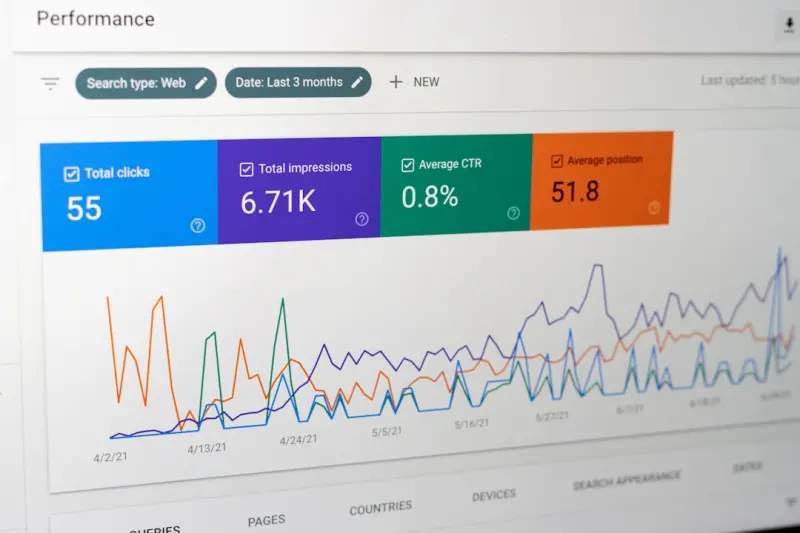
- Click‑through rate (CTR) from rich results. Use Search Console to monitor any uplift after adding schema.
- Average position for long‑tail queries. Community content often targets very specific phrases that were previously unranked.
- Engagement metrics. Time on page and scroll depth tend to rise when users see authentic user voices.
My favorite tool for visualizing this data is Google Data Studio, where you can blend Search Console, Analytics, and even your comment platform’s API into a single dashboard.
8. Actionable Checklist for Launching Community‑Driven SEO
- Audit existing community assets (comments, reviews, forums).
- Enable and moderate comments on high‑value posts.
- Implement
CommentandReviewschema via a plugin or custom JSON‑LD. - Set up a custom post type for a knowledge base and map it to a robust taxonomy.
- Launch a user‑generated image gallery with standardized filenames and alt text.
- Cross‑link all community pieces to relevant taxonomy archives and pillar pages.
- Monitor performance with the KPI framework above and iterate.
Following this checklist will transform a static WordPress site into a living, breathing SEO engine powered by real user interaction.
Conclusion: Community Is Not a Afterthought—It’s an SEO Strategy
In a landscape where algorithm updates reward relevance, authority, and freshness, community signals are a natural source of all three. By deliberately enabling, structuring, and amplifying user‑generated content, you give search engines the rich, contextual signals they need to elevate your WordPress site in the rankings.
So the next time you consider turning off comments to “clean up” your site, remember: those tiny conversations could be the very thing that pushes you from page three to the coveted top‑five.

Kris M. Chen is a dedicated legal paralegal based in Texas, specializing in delivering comprehensive case management and litigation support. Known for a meticulous approach to legal research and document preparation, Kris plays a vital role in navigating complex legal workflows and ensuring seamless trial preparation.
Related Posts

Unlocking Gutenberg: Turn WordPress Blocks Into SEO Powerhouses
Learn how to harness Gutenberg’s native features—semantic headings, reusable blocks, dynamic que... Read More
Gutenberg to Google: Boosting WordPress SEO Block by Block
Discover a practical framework for using Gutenberg’s block architecture to improve WordPress SEO, ... Read More
Scaling WordPress SEO for Global Audiences: A Practical Roadmap
A detailed, actionable guide walks you through architecture, plugins, Core Web Vitals, structured da... Read More
Top Posts

Turning Your Product Catalog into an SEO Powerhouse with Structured Data and User Signals
Learn how to transform a large eCommerce catalog into a search‑engine‑friendly asset using structured data, user‑generated signals, and smart crawling tac...Read More

From Clicks to Customers: Rethinking SEM for Subscription SaaS
A new SEM playbook shows SaaS marketers how to map keywords to the subscription funnel, use lifetime‑value bidding, integrate search signals with in‑product...Read More

When AI Becomes Your Search Engine’s Brain: A SaaS Playbook
AI search transforms static keyword lookup into a personalized, conversational assistant. This playbook guides SaaS teams through data preparation, hybrid index...Read More

The Power of Internal Linking: A Blueprint for Sustainable SEO Growth
Discover why internal linking is the unsung hero of SEO, how to build a logical hierarchy, optimize anchor text, leverage structured data, and future‑proof yo...Read More
0 Comments
Post Comment
You will need to Login or Register to comment on this post!