

Why WordPress Taxonomies Deserve Your SEO Attention
When most people think about WordPress SEO they jump straight to content and backlinks. They forget that the very way WordPress organizes that content can either amplify or sabotage your ranking potential. Taxonomies—categories, tags, and especially custom taxonomies—are the hidden scaffolding that tells search engines how your site’s ideas relate to one another. If you treat them as an after‑thought, you’re leaving a massive, low‑effort SEO lever untouched.
Understanding the Taxonomy Landscape
WordPress ships with two built‑in taxonomies:
- Categories – hierarchical, ideal for broad grouping.
- Tags – flat, perfect for micro‑thematic connections.
But the real power comes from custom taxonomies. They let you create domain‑specific vocabularies—think “product‑type,” “case‑study‑industry,” or “service‑region.” When implemented thoughtfully, they:
- Provide clear topical signals to Google.
- Boost internal linking equity.
- Generate SEO‑friendly archive pages that rank for long‑tail queries.
Step 1: Audit Your Existing Taxonomies
Before you add or tweak anything, you need a baseline. Use a simple spreadsheet to capture:
- All current categories and tags.
- Post counts per term.
- Slug structure (avoid stop‑words and overly generic names).
- Whether each archive page is indexed (check
noindextags).
Look for red flags such as:
- Duplicate or overlapping terms (e.g., “News” vs. “Updates”).
- Thin taxonomy archives that contain only a handful of posts.
- Long, keyword‑stuffed slugs that look spammy.
Cleaning up at this stage prevents crawl waste and sets the stage for a more coherent site architecture.
Step 2: Design a Semantic Taxonomy Blueprint
Think of your taxonomy map as a semantic graph. Start with the highest‑level concepts that define your business, then branch out into sub‑categories that capture user intent. For a SaaS company, a possible hierarchy might look like:
- Solutions
- Marketing Automation
- Customer Success
- Revenue Ops
- Industries
- Healthcare
- Fintech
- E‑commerce
- Resources
- Whitepapers
- Webinars
- Case Studies
Each node becomes a custom taxonomy term. The deeper you go, the more specific the keyword opportunity. But remember: depth should be balanced with usability. A five‑level hierarchy can confuse both users and crawlers.
Step 3: Implement Custom Taxonomies the Right Way
WordPress developers can register a taxonomy with register_taxonomy(). Here’s a distilled example for “industry”:
function register_industry_taxonomy() {
    $labels = array(
        'name' => _x( 'Industries', 'taxonomy general name' ),
        'singular_name' => _x( 'Industry', 'taxonomy singular name' ),
    );
    $args = array(
        'hierarchical'      => true,
        'labels'            => $labels,
        'show_ui'           => true,
        'show_admin_column' => true,
        'query_var'         => true,
        'rewrite'           => array( 'slug' => 'industry' ),
    );
    register_taxonomy( 'industry', array( 'post', 'product' ), $args );
}
add_action( 'init', 'register_industry_taxonomy' );
Key takeaways:
- Hierarchical = true when you need parent‑child relationships.
- Set a clean
slug(avoid underscores, keep it short). - Enable
show_admin_columnfor quick editing.
Step 4: Optimize Archive Pages for Rankings
Every taxonomy term generates an archive URL (e.g., example.com/industry/healthcare/). To turn these pages into SEO assets:
- Write a unique, concise description for each term. WordPress stores this in the “Description” field; surface it in the template with
term_description(). - Implement structured data best practices—use
ArticleorWebPageschema on archive pages to signal their purpose. - Include a curated list of top posts (5‑10) to boost dwell time and internal link equity.
- Apply a canonical tag if you have multiple URLs pointing to the same term (e.g., pagination).
When Google sees a well‑crafted, content‑rich archive, it often treats it as a “topic hub,” which can rank for both the primary term and long‑tail variations.
Step 5: Leverage Taxonomies for Internal Linking
Internal linking is the lifeblood of crawl efficiency. By using taxonomy terms as anchors, you create natural pathways:
- Within a post about “Healthcare Revenue Ops,” link the phrase “Healthcare” to the
/industry/healthcare/archive. - When you publish a new case study, assign it to the relevant “Solutions” and “Industries” terms—this automatically adds it to two hub pages.
Consider a taxonomy‑based breadcrumb plugin. Breadcrumbs that reflect your custom hierarchy (Home → Solutions → Customer Success) reinforce topical relevance and improve click‑through rates from SERPs.
Step 6: Monitor Crawl Budget and Indexation
Google allocates a finite crawl budget per site. Taxonomy archives can consume a disproportionate share if you have hundreds of thin terms. Use Google Search Console’s “Coverage” report to:
- Identify “Submitted URL not found (404)” for obsolete terms.
- Spot “Crawl anomaly” warnings on low‑value archives.
For terms that consistently under‑perform (few impressions, high bounce), consider adding noindex via a simple functions.php snippet:
function noindex_thin_taxonomies() {
    if ( is_tax() && get_queried_object()->count < 5 ) {
        echo '<meta name="robots" content="noindex,follow">';
    }
}
add_action( 'wp_head', 'noindex_thin_taxonomies' );
Step 7: Sync Taxonomies with Your Content Workflow
SEO is only as good as the process that sustains it. Make taxonomy assignment a mandatory step in your editorial checklist:
- Content creators choose at least one primary and one secondary term before publishing.
- Editors verify that the chosen terms align with keyword research.
- Automated tools (e.g., a custom Gutenberg block) surface the taxonomy picker directly within the editor interface. Speaking of Gutenberg, you might find block editor SEO tips helpful for embedding taxonomy selectors.
Step 8: Future‑Proof with Headless and API‑First Strategies
As more brands adopt a headless WordPress architecture, taxonomies remain a cornerstone. The REST API exposes taxonomy endpoints (/wp-json/wp/v2/taxonomy), allowing you to:
- Render taxonomy‑driven navigation menus in a React or Vue front‑end.
- Feed taxonomy data into a third‑party search service (e.g., Algolia) for instant, relevance‑boosted results.
- Synchronize taxonomies with external CRMs or product catalogs, ensuring a single source of truth across the customer journey.
When the same taxonomy logic powers both your website and your marketing automation, you eliminate content silos and amplify SEO signals across channels.
Wrapping Up: Taxonomies as a Sustainable SEO Asset
Most WordPress owners treat taxonomies as a decorative menu system. In reality, they’re a strategic SEO asset that can:
- Clarify site hierarchy for crawlers.
- Generate keyword‑rich, indexable pages with minimal effort.
- Streamline internal linking and boost page authority.
- Adapt gracefully to headless or API‑first environments.
Investing time now to design, implement, and maintain a robust taxonomy framework pays dividends in crawl efficiency, SERP visibility, and ultimately, qualified traffic. Treat your taxonomy plan as a living document—review it quarterly, prune the dead weight, and expand where new market opportunities arise. The result? A WordPress site that doesn’t just rank—it dominates its semantic niche.

Robert Mathews is a professional content marketer and freelancer for many SEO agencies. In his spare time he likes to play video games, get outdoors and enjoy time with his family and friends.
Related Posts
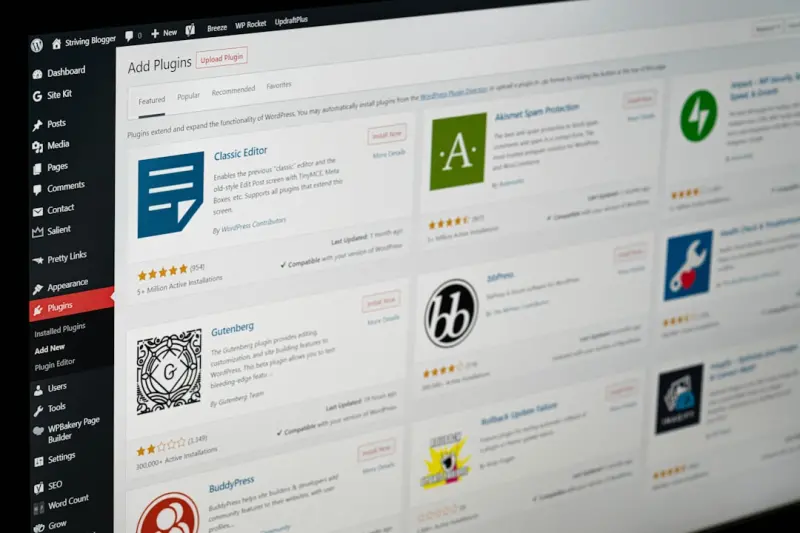
Supercharging WordPress SEO with Dynamic Taxonomy and Content Hubs
Learn a fresh WordPress SEO approach: use dynamic taxonomies, build content hubs, and leverage struc... Read More

Unlocking WordPress SEO: How Gutenberg’s Block Editor Supercharges Rankings
Learn to leverage Gutenberg’s block editor to boost WordPress SEO, improve site speed, and impleme... Read More
Scaling WordPress SEO for Global Audiences: A Practical Roadmap
A detailed, actionable guide walks you through architecture, plugins, Core Web Vitals, structured da... Read More
Top Posts

2024 SEO Tips from Rose DesRochers: Riding the Wave of Intent, AI, and Authority
Rose DesRochers reveals the 2024 SEO strategies that blend user intent, AI content, and technical excellence to boost rankings and drive real traffic....Read More

Why Google’s MUM Is Redefining SaaS Search Strategy
Explore the impact of Google’s Multitask Unified Model on SaaS marketing, learn practical steps to create multimodal hubs, and future‑proof your SEO strateg...Read More

Passage Indexing Unlocked: A SaaS Playbook for Deep SERP Wins
Passage indexing lets Google surface bite‑sized answers from deep within your pages. This guide shows SaaS marketers how to structure, markup, and promote con...Read More

Global SEO Playbook: Scaling Your SaaS for International Growth
A comprehensive guide to international SEO for SaaS, covering technical foundations, localized keyword research, content strategy, link building, and measuremen...Read More
0 Comments
Post Comment
You will need to Login or Register to comment on this post!