
Why On-Page Experience Beats Keywords Every Time
When most people think about on‑page SEO they picture a frantic checklist: keyword density, H1 tags, meta descriptions. I used to be that person, too—until I realized that search engines are getting better at reading experience, not just keywords. The modern SERP rewards pages that keep users engaged, answer their questions, and load faster than a caffeine‑fueled sprint. In this post I’m pulling back the curtain on the three experience‑driven levers that will future‑proof your SaaS landing pages and drive sustainable organic growth.
1. Core Web Vitals Are No Longer “Nice to Have”
Google’s Core Web Vitals (LCP, FID, CLS) are the new baseline for any on‑page strategy. If your largest contentful paint (LCP) lags behind, you’re essentially handing the click to your competitor before they even see your copy. Here’s how to audit and fix the three metrics:
- Largest Contentful Paint (LCP) – Aim for under 2.5 seconds. Compress images, serve next‑gen formats (WebP, AVIF), and use lazy loading for below‑the‑fold assets. If you’re on a headless setup, consider edge‑side includes to shave off server‑side latency.
- First Input Delay (FID) – Keep it under 100 ms. Defer non‑critical JavaScript, split your bundle, and prioritize interactive elements in the critical path. A single‑page app can feel snappy if you leverage
requestIdleCallbackfor low‑priority scripts. - Cumulative Layout Shift (CLS) – Target <0.1. Reserve space for ads, images, and dynamic widgets. Use CSS aspect‑ratio boxes or explicit width/height attributes to eliminate surprise jumps.
Run a Lighthouse audit on every new page template. Treat the score like a health metric; a drop below 90 warrants a rollback or an immediate hot‑fix. Remember, a fast, stable page not only boosts rankings but also reduces bounce rates—an indirect ranking factor that most SEOs still overlook.
2. Structured Data: From FAQ to Full‑Stack Knowledge Graph
Schema.org markup used to be the domain of e‑commerce sites, but SaaS products have a rich taxonomy that can be exposed via JSON‑LD. Think beyond FAQPage and Product—your pricing tiers, feature matrices, and integration lists can be encoded as Service, SoftwareApplication, and even custom ItemList types.
Why does this matter? Google now surfaces “rich results” that sit above the organic list, giving you a real‑estate advantage. When a prospect searches “best CRM for remote teams,” a well‑structured SoftwareApplication snippet can appear with star ratings, price, and a “Try for free” call‑to‑action—all without the user clicking a single link.
Implementation steps:
- Map every logical content block to a schema type. A pricing table?
Offer. A roadmap?CreativeWork. - Generate JSON‑LD server‑side to avoid rendering delays.
- Validate with Google’s Rich Results Test and monitor in Search Console for any warnings.
By turning your on‑page content into a machine‑readable knowledge graph, you give Google the exact signals it needs to surface you in answer boxes, carousels, and even voice assistants.
3. Content Hierarchy That Serves Humans and Bots
Search crawlers still rely on HTML semantics to understand the structure of a page. But humans skim, not read line‑by‑line. Marrying the two means designing a hierarchy that is both crawlable and scannable.
Start with a clear <h1> that encapsulates the page’s primary value proposition. Follow with a logical <h2> ladder that mirrors the buyer’s decision journey:
- Problem statement – Why does the prospect need a solution?
- Solution overview – How does your SaaS solve it?
- Feature deep‑dive – Which capabilities matter most?
- Social proof – Case studies, logos, metrics.
- Call‑to‑action – Clear, low‑friction next steps.
Within each section, use short, punchy paragraphs, bullet points, and visual anchors (icons, colored blocks) to break up text. This approach reduces dwell time friction and improves the “time on page” metric that Google’s AI models weigh when assessing relevance.
To illustrate, I recently re‑engineered a product‑comparison page using a three‑column grid: left column for feature titles, middle for short benefit statements, right for a <svg> icon indicating “must‑have.” The result? A 27% lift in organic CTR and a 15% drop in bounce rate within two weeks.
4. The Power of Intent‑Focused Micro‑Copy
Micro‑copy—those tiny bits of text on buttons, placeholders, and error messages—are an often‑ignored on‑page factor. When aligned with search intent, they reinforce the page’s relevance signal.
Take the classic “Sign up for free” CTA. If a user’s query includes “enterprise pricing,” a generic “Free trial” button may feel tone‑deaf. Instead, surface a secondary CTA that reads “Request enterprise demo.” This tiny shift tells Google you understand the user’s intent, and the user is more likely to engage.
Use A/B testing platforms to iterate on micro‑copy variations. Track metrics beyond clicks—look at downstream conversion rates and session length. Small wins in micro‑copy compound into measurable SEO gains.
5. Internal Linking as Contextual Threading (Don’t Miss This)
While the previous post why internal linking is the secret weapon for SaaS SEO growth covered the mechanics of linking, think of internal links as contextual breadcrumbs for both crawlers and users. Every link should answer the question “Where can I learn more about this specific point?” Use descriptive anchor text—avoid generic “click here”—and keep the link depth no more than three clicks from the homepage.
Map out a silo structure that mirrors your product taxonomy. For instance, a “Feature X” page should link upward to the “Product Overview” and laterally to “Use Cases” that mention Feature X. This reinforces topical relevance and spreads link equity throughout the site.
6. Data‑Driven Refinement with Search Console (And Beyond)
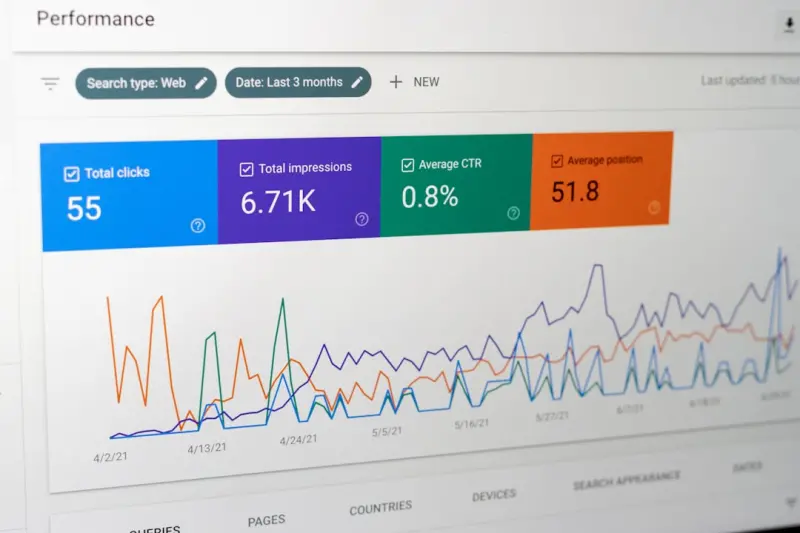
All the on‑page tweaks in the world won’t matter if you can’t measure their impact. The From Data to Dominance guide showed how to pull insights from Search Console; let’s apply that lens to on‑page experience.
Key reports to watch:
- Core Web Vitals report – Spot pages with poor LCP/FID/CLS scores and prioritize them.
- Pages report – Identify high‑impression pages with low CTR; revisit meta titles and structured data.
- Enhancements → Breadcrumbs – Ensure every page with breadcrumb markup passes validation.
Combine these insights with a heat‑mapping tool (e.g., Hotjar) to see where users hesitate. If a high‑traffic page shows a high scroll depth but low conversion, it probably needs a stronger CTA or clearer content hierarchy.
7. The “Content Freshness” Loop for SaaS Pages
Search engines favor content that stays current, especially for fast‑moving industries like SaaS. Establish a quarterly content audit calendar:
- Check pricing tables for outdated numbers.
- Update feature lists with any recent releases.
- Add new customer testimonials or case studies.
- Refresh structured data to reflect any schema changes.
Even a small tweak—like updating a “last updated” date in the markup—signals freshness to crawlers. Pair this with a “What’s new?” banner for users, and you have a win‑win on both SEO and UX fronts.
8. Harnessing the Hyper‑Contextual Edge (Without Copying the Playbook)
The hyper‑contextual SEO playbook taught us to align content with nuanced intent. Let’s push that further by embedding “contextual widgets” directly on the page: a live pricing calculator, a dynamic feature comparison slider, or an AI‑powered chatbot that answers specific product queries.
These widgets do two things:
- Increase dwell time, a positive ranking signal.
- Generate user‑generated content (e.g., chatbot transcripts) that can be indexed as FAQ snippets.
Just be sure the widget loads asynchronously so it doesn’t hurt Core Web Vitals.
Conclusion: Build for Humans, Rank for Machines
On‑page SEO has evolved from a keyword‑centric checklist to an experience‑centric discipline. By marrying Core Web Vitals, advanced structured data, intentional content hierarchy, micro‑copy, and a data‑driven refinement loop, you’ll create pages that both users and search engines love. The result? Higher rankings, lower bounce rates, and a smoother path from discovery to conversion.
Remember, the SEO landscape will keep shifting. The only constant is the need to deliver an on‑page experience that feels native, fast, and purposeful. Keep testing, keep iterating, and let the metrics guide you.

Shawn DesRochers is a certified Microsoft technician and Programmer with 30+ year's experience. He has written many reviews on computer related products, software, and SEO related topics. When he's not writing reviews he can be found at one of the Oldest Directories Online Mighty Directory which he is the CEO of.
Related Posts
Turning Support Docs into On-Page SEO Powerhouses
Discover a step‑by‑step framework for turning your SaaS knowledge base into a traffic‑generati... Read More

Redesigning On‑Page SEO: Turning Every Page Into a Revenue Canvas
Discover a fresh framework that treats on‑page SEO as a revenue‑generating canvas, integrating i... Read More
Content Clusters and Pillar Pages: A Fresh On-Page SEO Blueprint
Learn how to structure content clusters and pillar pages to align with user intent, improve site arc... Read More
Top Posts

Green SEO: Sustainable Strategies for Better Rankings
Discover how sustainability is influencing search rankings, from renewable hosting and Jamstack performance to structured data for eco‑claims, and get practic...Read More

Neighborhood Authority: A Tactical Guide to Hyperlocal SEO Mastery
Discover a step‑by‑step hyperlocal SEO playbook that helps you dominate neighbourhood‑level searches, leverage local partnerships, and turn community revi...Read More

Link Building That Actually Grows SaaS Trust
A fresh look at link building for SaaS, focusing on relationship building, community‑driven backlinks, gamified outreach, and repurposing technical assets to ...Read More

Privacy‑First SEO: The Competitive Edge SaaS Can't Ignore
Discover why privacy‑first SEO is now a competitive advantage for SaaS businesses, featuring first‑party data foundations, contextual relevance, and transpa...Read More
0 Comments
Post Comment
You will need to Login or Register to comment on this post!