
Reframing On-Page SEO as a SaaS Growth Engine
When I first stepped into the SaaS world, the conversation around SEO felt like a checklist of technical boxes: meta tags, header hierarchy, keyword density. Fast forward a few product launches, and the reality is far richer. On‑page SEO isn’t just about appeasing crawlers; it’s the front‑line sales rep that greets every visitor, nudges them toward the next demo, and ultimately fuels ARR. In this post I’ll unpack how to transform every piece of on‑page real estate into a conversion‑focused, authority‑building asset—without turning your site into a Frankenstein of keyword stuffing and UX compromises.
1. Start With the User Journey, Not the Keyword List
The first mistake most SaaS teams make is to reverse‑engineer a page from a spreadsheet of target terms. Google’s algorithm has evolved to prioritize search intent and experience over raw frequency. The smarter approach is to map your buyer’s journey—awareness, consideration, decision—and then design on‑page elements that speak to each stage.
- Awareness: Content that educates, solves a pain point, and positions your product as a thought leader.
- Consideration: Comparative tables, use‑case scenarios, and social proof that help prospects evaluate alternatives.
- Decision: Clear calls‑to‑action, pricing clarity, and low‑friction sign‑up forms that convert curiosity into a trial.
When your page architecture mirrors this journey, the keywords become natural by‑products of the narrative rather than forced insertions.
2. Semantic HTML: The Quiet Signal Google Loves
Beyond H1‑H3 tags, semantic HTML elements—<article>, <section>, <aside>, <nav>—provide a structural map that helps search engines understand content relationships. For SaaS products with dense feature lists, wrapping each major feature in its own <section> with an aria-labelledby attribute not only boosts accessibility but also signals hierarchy to crawlers.
Example:
<section id="feature-automation">
  <h2>Automation Engine</h2>
  <p>Our automation engine reduces manual effort by up to 70%...</p>
</section>
This tiny tweak can improve the chance that a feature‑specific query lands directly on the relevant subsection, reducing bounce and increasing dwell time.
3. Content Hubs: The Modern Topic Cluster Reimagined
Topic clusters are not new, but SaaS companies often treat the “pillar page” as a static landing page. Instead, think of it as a living hub that aggregates the most valuable sub‑topics, each with its own URL, SEO focus, and internal link equity. The hub should answer the overarching question, while the satellite pages dive deep into specifics—pricing nuances, API documentation, case studies.
Why this matters:
- Internal linking distributes link juice efficiently, helping new pages rank faster.
- Users can navigate from a high‑level overview to granular details without leaving your domain.
- Search engines see a clear thematic signal, which strengthens topical authority.
To avoid cannibalization, use canonical tags on variations of the same content and ensure each satellite page targets a distinct long‑tail phrase.
4. The Power of Strategic Internal Linking
Internal links are the circulatory system of your site. When done deliberately, they guide both users and bots toward the pages that matter most. Here’s a quick framework I use with my SaaS teams:
- Identify high‑value conversion pages (free trial, demo request, pricing).
- Audit existing content for opportunities to link back using natural anchor text.
- Prioritize links from pages with strong authority (blog posts with high traffic, resource hubs).
- Limit the number of links per page to avoid dilution—aim for 2‑5 contextual links that add real value.
For instance, a post about “how to reduce churn” can link to your pricing page with anchor text that reads “see how our tiered pricing helps you scale without hidden fees”. This creates a seamless flow from education to conversion.
Speaking of internal linking, you might also want to tame crawl budget to ensure Google actually discovers these strategic connections.
5. UX Signals: The Unspoken Ranking Factors
Google has repeatedly confirmed that user experience influences rankings. While Core Web Vitals dominate the technical side, there are softer signals that often slip under the radar:
- Scroll depth: Pages where users read past the fold indicate relevance.
- Interaction time: Hover effects, accordion expansions, and embedded demos keep users engaged.
- Click‑through pathways: A well‑placed “Read the case study” link that leads to a detailed PDF can boost dwell time.
To capture these signals, embed interactive elements—calculators, ROI estimators, short product demos—directly on the page. Make sure they load quickly (lazy‑load where appropriate) and are mobile‑friendly. The result is a page that not only ranks but also converts.
6. Freshness Without Fluff
Search engines love fresh content, but SaaS pages can’t be in a constant state of rewrite. Instead, adopt a “refresh‑first” mindset:
- Quarterly data updates: Replace old statistics with the latest industry benchmarks.
- Feature releases: Add a “What’s new” accordion that highlights recent product upgrades.
- Customer stories: Rotate case studies to showcase new verticals or use‑cases.
This approach signals to Google that your page remains relevant while preserving the SEO equity you’ve already built.
7. Leverage Structured FAQs (Without Overdoing Schema)
FAQ sections are a sweet spot for on‑page SEO. They answer common queries, increase keyword coverage, and can appear directly in SERPs as rich snippets. However, avoid the temptation to blanket every page with a massive FAQ block. Instead, tailor the FAQs to the page’s core intent. For a “Feature Comparison” page, ask:
- “How does Feature A differ from Feature B?”
- “What is the pricing impact of adding Feature C?”
When you format these as proper <h3> headings and use <dl> tags, you give crawlers a clean, semantic signal that’s more likely to be featured.
8. The Role of Visuals in On‑Page SEO
Images, diagrams, and videos are not just decorative—they’re indexing opportunities. Follow these best practices:
- Use descriptive, keyword‑rich
altattributes that explain the visual’s purpose. - Compress images to WebP or AVIF for faster load times.
- Include transcripts for videos to capture textual content for crawlers.
- Leverage
<figure>and<figcaption>tags to provide context.
In a SaaS context, a well‑designed architecture diagram can rank for “SaaS workflow automation diagram” and drive niche traffic that is highly qualified.
9. Trust Signals as On‑Page Ranking Boosters
Google’s E‑A‑T (Expertise, Authoritativeness, Trustworthiness) guidelines extend beyond backlinks. On‑page trust signals—customer logos, security badges, and certifications—can influence rankings indirectly by reducing bounce and increasing dwell.
Place these signals strategically:
- Above the fold on landing pages (e.g., “Trusted by 500+ enterprises”).
- Near CTAs (e.g., “SOC 2 compliant – your data is safe”).
- Within content where you discuss compliance or data handling.
To deepen the trust narrative, consider linking to resources that explain your security posture. A well‑crafted internal link to a page that grows SaaS trust reinforces authority across your site.
10. Measuring Success: Beyond Rankings
On‑page SEO should be evaluated with a blend of SEO and product metrics. Track these key performance indicators (KPIs):
| Metric | Why It Matters |
|---|---|
| Organic CTR | Indicates relevance of title/meta to search intent. |
| Dwell Time | Signals content quality to Google. |
| Conversion Rate (Free Trial, Demo) | Ultimate proof that on‑page signals drive business. |
| Page Load Time | Core Web Vitals impact both rankings and user satisfaction. |
| Internal Link Clicks | Shows effectiveness of link architecture in guiding users. |
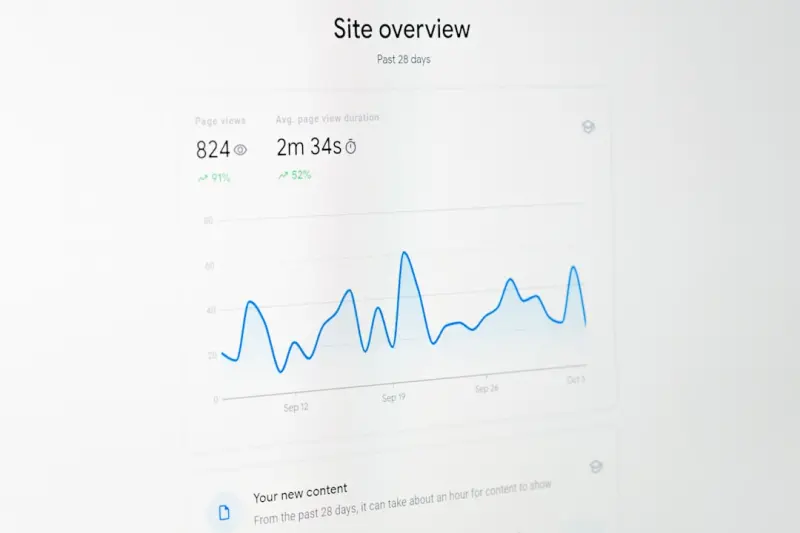
Set up custom dashboards that marry Google Search Console data with your product analytics platform. When you see a spike in organic traffic accompanied by a rise in trial sign‑ups, you’ve confirmed that on‑page SEO is directly feeding the sales funnel.
11. A Checklist to Future‑Proof Your On‑Page SEO
Wrap up with a practical, repeatable checklist you can hand to your content, design, and engineering teams:
- Map each page to a specific stage of the buyer’s journey.
- Use semantic HTML tags to outline content hierarchy.
- Structure content around a central hub with satellite pages.
- Implement strategic internal links to high‑value conversion pages.
- Audit UX signals weekly (scroll depth, interaction time).
- Schedule quarterly content refreshes with fresh data.
- Add targeted FAQ sections with proper markup.
- Optimize visuals: alt text, compression, captions.
- Place trust signals near CTAs and key messaging.
- Monitor SEO + product KPIs in a unified dashboard.
By treating on‑page SEO as an evolving, conversion‑centric discipline, SaaS companies can unlock a steady stream of qualified traffic that not only climbs the rankings but also fuels growth.

Jim Pearse, a seasoned freelance writer, brings a wealth of knowledge and passion to the world of home and garden. From the intricacies of landscaping to the nuances of interior design, Jim delves into every aspect of creating comfortable, beautiful, and functional living spaces.
Related Posts

Microcopy Mastery: Tiny Text That Drives Big SEO Wins
Learn why microcopy matters, how to audit and rewrite it for SEO, and see a real‑world case study ... Read More

Beyond Keywords: Building Intent‑Driven Content Clusters for On‑Page SEO
Learn to transform your pages into tightly‑connected content clusters that speak directly to user ... Read More

Mapping Search Intent to On‑Page SEO: From Keywords to Content Architecture
Learn to map user intent to your page’s architecture, optimize headings, schema, and internal link... Read More
Top Posts

Why Mobile‑First Intent Is the New Competitive Edge for SaaS Brands
A deep dive into mobile‑first intent for SaaS, covering content adaptation, Core Web Vitals, structured data, app store integration, and future‑proof tactic...Read More

From Launch to Rank: SEO Tactics for SaaS Feature Releases
This guide shows SaaS teams how to prep, launch, and optimize feature pages for search, covering keyword research, structured data, internal linking, and postâ€...Read More

Decoding MUM: How Multimodal AI Is Reshaping SEO Strategy
MUM marks Google’s shift to multimodal AI, demanding richer content that blends text, images, and video. This post outlines why it matters, actionable pillars...Read More

Competitive Gap Analysis: The Secret Weapon for Sustainable SEO Dominance
Learn why mapping competitor gaps—content, backlinks, and technical flaws—offers a powerful, sustainable edge in SEO, and how to turn findings into trafficâ...Read More
0 Comments
Post Comment
You will need to Login or Register to comment on this post!