

Why Headless Isn’t Just a Buzzword
When I first migrated a large‑scale ecommerce platform to a headless architecture, the immediate question from the team was, “Will this break our SEO?” The answer was a resounding yes and no—yes, because the traditional page‑rendering pipeline disappears, but no, because we gain unprecedented control over the signals we send to crawlers. By separating the presentation layer from the content API, you can serve a perfectly optimized HTML shell to bots while still delivering a snappy JavaScript experience to users, turning what once felt like a technical risk into a strategic advantage.
Crawl Budget in a Decoupled World
One of the hidden costs of going headless is the potential for wasted crawl budget, especially when API endpoints generate endless query strings that look like unique URLs to Google. To prevent this, I audit my URL taxonomy and implement strict canonical tags and robots directives at the edge, ensuring that only the most valuable pages are indexed. The result is a leaner index, faster discovery of fresh content, and a measurable lift in organic impressions without increasing server load.
Edge Caching Meets Core Web Vitals
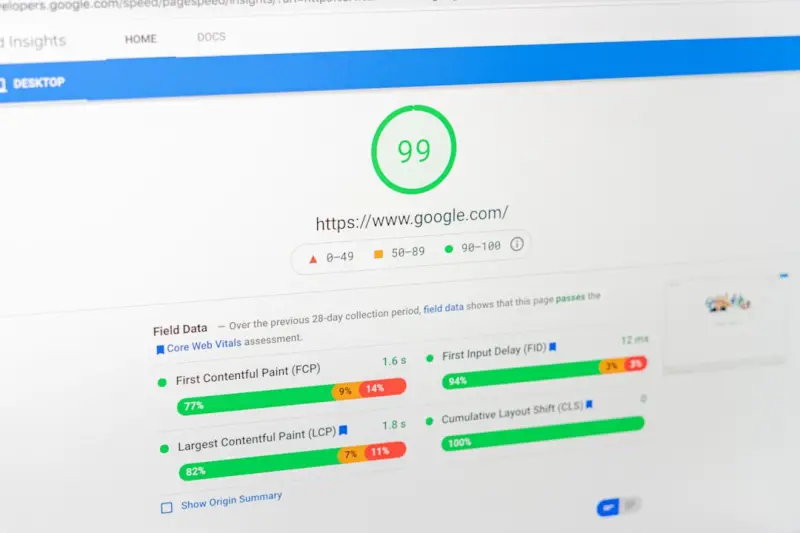
Edge networks have become the secret sauce for delivering sub‑second load times, a core component of Google’s Core Web Vitals scoring. By pushing static assets and even pre‑rendered HTML fragments to edge nodes, you reduce the distance between user and data, shaving milliseconds off First Contentful Paint and Largest Contentful Paint. I’ve seen sites cut their LCP by half simply by configuring edge‑level caching rules that respect the Cache‑Control header, turning a technical tweak into a ranking catalyst.
Dynamic Rendering Without the Headache
Dynamic rendering remains a controversial topic, but in a headless context it can be the bridge between search bots and JavaScript‑heavy front‑ends. Rather than maintaining two separate rendering stacks, I adopt a “render‑on‑demand” model that leverages serverless functions to serve pre‑rendered HTML only when the user‑agent header signals a crawler. This approach aligns perfectly with the concepts discussed in serverless architecture, delivering scalability without sacrificing SEO fidelity.
Structured Data at the Edge
Rich results are no longer optional; they are a baseline expectation for competitive SERPs. In a headless setup, you can inject JSON‑LD directly from the edge, tailoring schema to the request context (e.g., locale, device, or user intent). By doing so, you guarantee that every cached fragment carries the correct structured data, eliminating the mismatch that often occurs when the front‑end and back‑end evolve independently. This granular control translates into higher click‑through rates and better visibility for product, article, and FAQ rich snippets.
Hreflang Strategy for Global Headless Sites
International expansion demands a precise hreflang implementation, yet managing language tags across a decoupled front‑end can quickly become messy. I solve this by generating hreflang link tags within the API response, then having the edge layer prepend them to the final HTML before delivery. This ensures that each regional variant is correctly identified by Google while keeping the content repository clean and the front‑end agnostic of localization logic. The payoff is a unified global presence without duplicate‑content penalties.
Monitoring Log Files When APIs Serve Pages
Log file analysis has always been a cornerstone of technical SEO, but with headless APIs the traditional server logs no longer tell the full story. I supplement access logs with API request logs, correlating them to identify crawl patterns, error spikes, and latency bottlenecks. By visualizing this data in a dashboard, I can spot when bots are throttled by rate limits or when a new endpoint inadvertently blocks crawlers, allowing for rapid remediation before rankings suffer.
Testing and Validation Tools for Headless SEO
Testing a headless site requires a blend of traditional SEO tools and API‑focused validators. I routinely run Google Search Console’s URL Inspection on rendered HTML, while also using curl scripts to verify that the API returns the correct meta tags and structured data for each endpoint. Automated Lighthouse CI pipelines catch regressions in performance metrics, and specialized tools like Screaming Frog’s JavaScript rendering mode give me a full‑site crawl view that mirrors Googlebot’s behavior.
Future‑Proofing Your Technical Stack
The SEO landscape will continue to evolve toward faster, more personalized experiences, and a headless + edge architecture positions you at the forefront of that shift. By embedding SEO considerations into your API design, edge caching rules, and CI/CD pipelines today, you build a resilient foundation that can adapt to new ranking signals, voice‑first queries, and emerging content formats. In my experience, the teams that treat SEO as a first‑class citizen of their technical roadmap reap the biggest long‑term gains, turning what once seemed like a complex overhaul into a sustainable competitive edge.

Amanda is a passionate writer exploring a kaleidoscope of topics from lifestyle to travel and everything in between.
Related Posts

Crawl Budget Mastery: Directing Googlebot for Enterprise Scale
A deep dive into crawl budget management for large websites, covering assessment, prioritization, te... Read More

Edge SEO: Harnessing the CDN to Supercharge Technical Rankings
Edge SEO shifts critical SEO logic to the CDN, delivering faster crawlability, cleaner redirects, an... Read More

Mastering Crawl Budget: Strategic Tactics for Efficient Indexation
Discover a step‑by‑step approach to maximize Google’s crawl budget, using smarter sitemaps, re... Read More
Top Posts
Turning Your API Docs into a Search Magnet
A deep dive into turning technical API references into high‑ranking, traffic‑generating pages, with practical steps for keyword research, schema markup, com...Read More

Turning Paid Search into an Account‑Based Engine: A Playbook for B2B SaaS
This post reveals a step‑by‑step AB‑SEM strategy that aligns paid search with account‑based marketing, covering intent‑first keyword mapping, AI perso...Read More

Turning Facebook Groups into SEO Powerhouses
Learn the untapped SEO potential of Facebook Groups, from keyword‑rich discussions and member backlinks to live video optimization and data‑driven content p...Read More

Hyper‑Local Content Clusters: Dominating the “Near Me” Landscape
Discover a fresh local SEO approach that builds neighborhood‑specific content hubs, leverages schema and voice search, and scales without sacrificing quality,...Read More
0 Comments
Post Comment
You will need to Login or Register to comment on this post!