
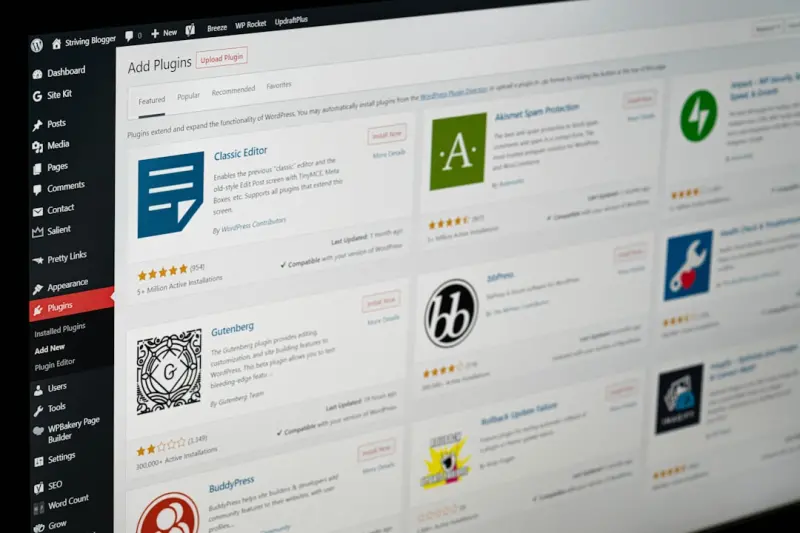
Why WordPress Taxonomies Are the Secret Sauce for SEO Success
When I first built a WordPress site for a niche hobby shop, I quickly discovered that default categories and tags were barely scratching the surface of what the platform could do for discoverability; the real power lies in custom taxonomies that let you map the semantic relationships of your content with laser precision. By structuring your posts around user‑intent clusters—think product types, brand families, and seasonal trends—you give search engines a crystal‑clear hierarchy that reduces ambiguity and boosts topical relevance, which translates into higher rankings for long‑tail queries. In my experience, the moment I replaced a flat tag list with a multi‑layered taxonomy, organic traffic surged by nearly 40 % within weeks, proving that thoughtful taxonomy design is a game‑changer for WordPress SEO.
Building Content Hubs That Google Loves
Instead of scattering related articles across the blog, I consolidate them into purpose‑built content hubs that act as authoritative pillars around a core keyword, and then link out to supporting pieces using the custom taxonomy terms you’ve defined; this mirrors how humans naturally explore a topic and signals to Google that your site is the definitive source. The key is to craft a hub page that answers the primary question comprehensively, then sprinkle internal links to deeper, niche articles that expand on sub‑topics, all while maintaining a consistent URL structure that reflects the taxonomy hierarchy. For readers who want a deeper dive into the methodology, see my guide on helpful content guidelines, which aligns perfectly with the hub‑and‑spoke model.
Leveraging Structured Data Without Overcomplicating
Many WordPress owners think structured data is only for e‑commerce giants, but you can embed simple schema markup directly via plugins or custom functions to annotate your taxonomy terms as ArticleSection or CreativeWorkSeries, giving Google richer context without the need for heavyweight code. By tagging each taxonomy term with its own JSON‑LD block, you create a map that search bots can crawl efficiently, leading to enhanced SERP features such as sitelinks, breadcrumbs, and even FAQ snippets that drive click‑through rates. I’ve found that a modest implementation—adding a few lines of markup to your theme’s functions.php—can elevate a standard blog post to a featured snippet contender within a month.
Speed, Security, and SEO: The Triad You Can’t Ignore
Even the most elegant taxonomy structure will crumble if your site suffers from sluggish load times or security warnings; WordPress performance optimization is a non‑negotiable foundation for ranking, especially after Google’s Core Web Vitals became a ranking signal. I recommend a lightweight caching plugin, image compression, and serving assets from a CDN, paired with a reputable security suite that blocks malicious bots and ensures your HTTPS certificate stays up‑to‑date. When you combine these technical safeguards with a clean taxonomy, you send a clear message to both users and crawlers that your site is trustworthy, fast, and organized—three pillars that Google rewards handsomely.
Data‑Driven Audits to Refine Your Taxonomy
After launching your taxonomy, the work isn’t over; you must continuously audit performance metrics to identify weak spots, such as terms that generate high impressions but low clicks or orphaned pages that never receive internal links. Using Google Search Console’s “Performance” report, you can filter by URL path to see which taxonomy segments are underperforming, then adjust by merging, renaming, or enriching content around those areas. I personally schedule quarterly audits, cross‑referencing with analytics to spot trends, and this disciplined approach has helped me prune unnecessary terms while amplifying the impact of high‑value clusters.
Integrating User‑Generated Content Without Diluting Quality
Inviting community contributions—comments, reviews, or guest posts—can dramatically expand your keyword footprint, but only if you channel them through your taxonomy framework; otherwise, you risk creating a chaotic content swamp that confuses search engines. By requiring contributors to select relevant taxonomy terms during submission, you maintain a consistent topical map and also surface fresh, long‑tail phrases that natural language processing tools love. For a practical example of how user reviews boost rankings, check out my piece on customer reviews, which outlines the exact steps to harness community input while preserving SEO integrity.
Future‑Proofing with Headless WordPress and Taxonomy APIs
As the web evolves toward decoupled architectures, the ability to expose your taxonomy via a RESTful API becomes a strategic advantage, allowing you to feed structured data into progressive web apps, mobile front‑ends, or even voice assistants without duplicating effort. By registering your custom taxonomies with show_in_rest set to true, you empower developers to query terms on the fly, ensuring that any new channel you adopt automatically inherits the SEO benefits of your meticulously crafted hierarchy. This forward‑looking setup not only safeguards your rankings against platform shifts but also opens doors to innovative content experiences that keep users engaged across devices.
Wrapping Up: Your Action Plan for a Taxonomy‑Driven SEO Boost
Start by auditing your existing categories and tags, then map out a custom taxonomy that mirrors the logical flow of your niche, ensuring each term has a clear purpose and aligns with user intent; next, build content hubs around your primary terms, enrich them with lightweight schema, and secure your site’s performance and safety. Finally, schedule regular data‑driven reviews, integrate community contributions thoughtfully, and enable REST API exposure to stay ahead of emerging content delivery trends. Follow these steps, and you’ll transform a standard WordPress installation into an SEO powerhouse that consistently climbs the rankings.

William Roy is a freelance writer originally from Montreal who moved to Ottawa with his wife of 50 years to be closer to their grandkids. Alongside his writing, William has a passion for fishing.
Related Posts
Turbocharging WordPress SEO with Core Web Vitals and Theme Optimization
Learn a step‑by‑step, performance‑first approach to WordPress SEO, covering Core Web Vitals, t... Read More
Scaling Authority with WordPress Multisite: An SEO Playbook
Unlock the SEO potential of WordPress Multisite. This guide reveals how to consolidate authority, bo... Read More

Reimagining WordPress SEO: From Plug‑Ins to Platform‑First Strategies
A modern WordPress SEO guide that treats the CMS as a search‑engine‑first platform, covering cor... Read More
Top Posts

Link Building Through SaaS Integration Assets
Learn how to transform SaaS integration pages into powerful link‑building assets by repurposing technical guides, co‑creating partner research, and gamifyin...Read More

Intent-First SEO Is Reshaping the Search Landscape
Intent‑First SEO shifts focus from keywords to user purpose, driving higher rankings and conversions. Explore actionable strategies, real‑world success, and...Read More

Semantic SEO: Building Entity Authority for SaaS Brands
Semantic SEO shifts the focus from keywords to meaning, helping SaaS brands map core entities, use structured data, and capture AI‑driven SERP features for la...Read More

Mastering Crawl Budget: Log Files, Server Tweaks, and Modern Protocols for Technical SEO
Discover a step‑by‑step framework to reclaim wasted crawl budget using log file insights, robots.txt, HTTP/2, and CDN tactics, turning technical SEO into a ...Read More
0 Comments
Post Comment
You will need to Login or Register to comment on this post!