
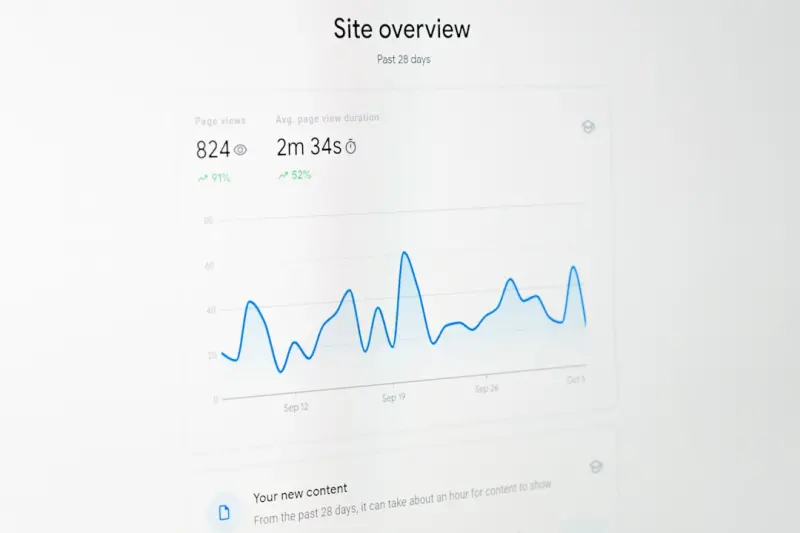
When I first stepped into the world of B2B SaaS SEO, I quickly realized that rankings aren’t a set‑and‑forget proposition. The search landscape shifts daily, and the tactics that vaulted a product page to the top last quarter can be flat‑lined by a new algorithm tweak or a change in buyer intent. That realization sparked my obsession with treating SEO as a living experiment—much like a product team would A/B test a new feature. In this post I’m pulling back the curtain on a systematic, data‑first framework for running SEO experiments that actually move the needle.
Why a Test‑Driven Mindset Is the Missing Piece
Most SEO guides still operate on a “best practices” checklist: optimize titles, add alt text, build backlinks. Those steps are undeniably important, but they’re static. A test‑driven mindset asks a different question: What works for our specific audience, product, and market today? The answer evolves.
Think of SEO as a hypothesis engine. Every change you make—whether it’s a new content angle, a schema tweak, or a page speed improvement—should start with a clear hypothesis about its impact on organic traffic, conversion rate, or both. When you track outcomes against a control, you turn guesswork into insight, and insight into action.
Crafting a Testable SEO Hypothesis
Start with a problem statement. For example: “Our product comparison page sees high impressions but low click‑through rates (CTR) in the SERPs.” From there, formulate a hypothesis:
- Hypothesis: Adding a concise, benefit‑focused FAQ schema will increase CTR by at least 8% within four weeks.
Notice the hypothesis is specific, measurable, and time‑bound. Vague ideas like “improve content” won’t survive rigorous testing.
Choosing the Right Metrics (Beyond Rankings)
Clicks, impressions, and position are the classic SEO metrics, but they’re only the tip of the iceberg. To truly gauge an experiment’s success, blend traditional SEO data with user‑behavior signals. Here are three tiers of metrics you should monitor:
- Visibility Metrics: Impressions, average position, click‑through rate from Google Search Console.
- Engagement Metrics: Bounce rate, time on page, and scroll depth—especially crucial for B2B SaaS where the buyer’s journey can be lengthy.
- Conversion Metrics: Form submissions, demo requests, or trial sign‑ups originating from organic traffic.
When you align these layers, you’ll see not just whether a page is seen, but whether it’s moving prospects further down the funnel.
Designing a Controlled Experiment
SEO experiments are rarely as clean as a classic A/B test because you can’t always split traffic perfectly. However, you can still create a control group and a test group using one of these approaches:
- URL‑Level Split: Duplicate a target page (e.g.,
/pricingvs./pricing-test) and serve different variants. Use canonical tags to avoid duplicate‑content penalties. - Geographic Split: Apply changes to a specific country or region and compare against the global baseline.
- Time‑Based Split: Roll out a change for a defined window (e.g., weeks 1‑4) and compare performance before and after, making sure there are no seasonality spikes.
Whichever method you pick, always document the exact date, scope, and any external factors (product launches, PR events) that could influence the results.
Tools & Automation: Turning Data Into Action
Manually pulling data from Search Console, Google Analytics, and your CRM is a recipe for error. Here’s a lightweight stack I rely on:
- Search Console API + BigQuery: Export impressions, clicks, and position data daily. Build a dashboard that slices by URL, device, and query.
- Heatmap & Session Replay (e.g., Hotjar): Capture how users interact with the new page variant. This helps you connect user interaction metrics to SEO performance.
- Log Analyzer: Monitor crawl frequency and detect if search bots are treating the test variant differently. The crawl budget optimization insights often reveal hidden bottlenecks.
- Automation Scripts (Python/Google Apps Script): Schedule data pulls, calculate lift percentages, and email results to stakeholders.
When the pipeline is automated, you can run multiple experiments in parallel without drowning in spreadsheets.
Case Study Snapshot: Turning a Low‑CTR Page Into a Lead Magnet
One of our SaaS clients had a “Features Overview” page that ranked #3 for several high‑intent keywords but only generated a 2% CTR. We hypothesized that the page’s lack of clear answer snippets was the culprit. The test involved:
- Adding
FAQPagestructured data with three concise, benefit‑oriented questions. - Rewriting the meta description to include a compelling call‑to‑action.
- Embedding a short, auto‑play video that explained the top feature in 30 seconds.
After four weeks, the page’s CTR jumped to 9.5%, and demo‑request conversions rose by 12%. Importantly, the average session duration also increased, suggesting that the richer content kept users engaged longer—a perfect illustration of how user interaction metrics can validate SEO wins.
Common Pitfalls (And How to Dodge Them)
1. Ignoring Statistical Significance
Don’t declare victory after a 2‑day spike. Use a confidence calculator (e.g., a 95% confidence interval) to ensure the observed lift isn’t just random noise.
2. Over‑Testing the Same Variable
If you change headline, meta, and schema all at once, you won’t know which tweak drove the lift. Isolate variables whenever possible.
3. Forgetting the User Journey
SEO isn’t just about getting clicks; it’s about delivering value after the click. Track downstream metrics like lead quality and churn to truly assess impact.
4. Neglecting Technical Health
Even a brilliant content experiment can be throttled by crawl budget limits or slow server responses. Regularly audit technical health to keep the engine running smoothly.
Putting It All Together: A Playbook Checklist
- Define the problem & hypothesis.
- Choose a control vs. test split method.
- Set primary (CTR, organic conversions) and secondary (bounce, dwell time) metrics.
- Configure data pipelines (Search Console, analytics, logs).
- Run the experiment for a minimum of 2‑4 weeks.
- Analyze results with statistical rigor.
- Iterate: roll out winning variant, retire losing one, and document learnings.
By treating SEO as a continuous experiment, you convert every page into a potential growth lever. The beauty of this approach is that it scales: as you build a library of tested hypotheses, patterns emerge, and you can apply proven tactics across the entire site portfolio.
Future Outlook: SEO Experiments Meet AI
Artificial intelligence is already reshaping content creation, but its next frontier is experiment design. Imagine an AI that scans your site, proposes hypotheses based on gaps in topical coverage, and even drafts the test variants for you. While we’re not fully there yet, early tools are emerging that can generate meta tags, suggest schema types, and predict CTR lifts—essentially acting as a co‑pilot for your SEO lab.
Until those assistants become mainstream, the fundamentals remain the same: clear hypotheses, rigorous measurement, and a relentless curiosity about what makes your audience click, read, and convert.
Start small, stay disciplined, and watch your organic pipeline transform from a static traffic source into a dynamic, data‑driven growth engine.

Amanda is a passionate writer exploring a kaleidoscope of topics from lifestyle to travel and everything in between.
Related Posts

SEO Mastery for SaaS Pricing Pages: Turning Cost Into Clicks
A deep dive into SEO strategies tailored for SaaS pricing and feature pages, covering keyword intent... Read More

SEO Strategy for SaaS Feature Release Pages: Turning Updates into Traffic
Feature release pages are untapped SEO assets. This guide shows how to map search intent, use struct... Read More

Voice-First SEO: Turning Conversational Queries into Ranking Power
Learn the essential steps to dominate voice search, from conversational keyword research to schema m... Read More
Top Posts

Micro‑Influencers: The Scalable Trust Engine Every eCommerce Brand Needs
Micro‑influencers combine high engagement with low cost, offering eCommerce brands a powerful, trust‑based growth engine. Learn a data‑first framework, at...Read More

How to Turn Your SaaS Help Center into an SEO Powerhouse
Discover a step‑by‑step framework to boost your SaaS help center’s search visibility, from audit and keyword alignment to structured data, internal linkin...Read More

Beyond Clicks: A New Playbook for SaaS Digital Marketing Attribution
A modern SaaS marketer needs more than last‑click data. This post outlines a holistic attribution playbook that unites customer data platforms, micro‑influe...Read More

Building SEO‑Ready WordPress Themes: A Developer’s Playbook
Discover how to design lean, performance‑focused WordPress themes that embed schema, optimize images, and support multilingual SEO—all while staying ahead o...Read More
0 Comments
Post Comment
You will need to Login or Register to comment on this post!