

Why the Search Generative Experience Changes the Game for SaaS Brands
When Google announced its Search Generative Experience (SGE), the SEO community collectively took a deep breath. The familiar SERP—those rows of blue links, snippets, and featured boxes—has been augmented with AI‑crafted answers, multi‑turn dialogs, and visual storytelling. For a SaaS company, this isn’t just a cosmetic makeover; it’s a wholesale shift in how prospects discover solutions. Suddenly, a user’s intent can be satisfied without a click, or it can be funneled through a series of AI‑driven touchpoints that demand a different kind of relevance. In this post I’ll walk you through the practical implications of SGE, how to future‑proof your content, and which signals you need to start monitoring today.
Understanding the Anatomy of an SGE Result
At its core, SGE overlays the traditional ten‑result list with a dynamic “answer panel” that pulls from multiple indexed pages, synthesizes information, and then presents a concise, conversational block. The panel can expand, allowing users to ask follow‑up questions—essentially turning a static search into an interactive session. Behind the scenes, Google leans heavily on its Knowledge Graph, large‑language models, and the “E‑E‑A‑T” framework (Experience, Expertise, Authority, Trust). For a SaaS marketer, this means you have two parallel fronts to win: the classic ranking battle for the blue links and the newer battle for inclusion inside the AI‑generated answer.
Signal #1: Entity Authority Becomes a Ranking Currency
The old keyword‑centric approach still matters, but it’s now complemented by how strongly Google perceives your product, company, and even niche as an “entity.” An entity is a uniquely identifiable concept—think project‑management‑software or customer‑success‑platform. When the AI engine builds its answer, it looks for the most authoritative entities to reference. To boost entity authority you should:
- Consistently publish deep‑dive content that defines and contextualizes your core concepts.
- Earn mentions from high‑trust domains (news outlets, analyst firms, industry portals).
- Maintain a clean, disambiguated Google Knowledge Panel—claim it, keep it up‑to‑date, and link back to your most important landing pages.
Think of it as building a reputation score that the AI consults when deciding which snippet to surface.
Signal #2: Structured Narrative Markup Over Traditional Schema
While most of us have already implemented structured data to feed rich results, SGE cares about a higher‑order narrative structure. Instead of sprinkling FAQPage or Product tags, consider using the Article and WebPage types together with the about property to explicitly tie individual pages to your central entity. This creates a semantic map that the generative model can traverse, stitching together a more coherent answer. The trick is to keep the markup human‑readable; over‑optimizing with redundant properties can confuse the model and lead to omission.
Signal #3: User‑Generated Signals Take on New Weight
Google’s AI model doesn’t just read the text—it also evaluates how users interact with that text. Dwell time, scroll depth, and especially multi‑turn engagement (clicking “More about X” in the answer panel) feed a feedback loop. For SaaS, this means that a well‑crafted product demo video, an interactive ROI calculator, or a short explainer GIF embedded on a landing page can become a silent ranking booster. It also implies that any “dead‑end” content—pages where users bounce immediately—can drag down the perceived quality of your entity.
Adapting Your Content Workflow for SGE
The biggest operational shift is to treat content as a dialogue rather than a one‑off article. I recommend a three‑stage workflow:
- Intent Mapping: Use Search Console and query‑level clustering tools to map out the most common questions around your SaaS niche (e.g., “how to reduce churn” or “best integration platform”).
- Answer Architecture: For each cluster, design a “pillar conversation” that includes a concise opening paragraph, a list of sub‑questions, and a CTA that encourages deeper exploration.
- Signal Amplification: Publish the pillar as a long‑form guide, then break it into micro‑content (infographics, slide decks, short videos) and cross‑link them using canonical tags and structured narrative markup.
This approach mirrors how the AI assembles its answers: it looks for a primary source that covers the topic comprehensively, then pulls in supplemental assets to enrich the response.
Practical Example: Turning a Pricing FAQ into an SGE Asset
Imagine you run a subscription‑billing SaaS. Your website already hosts a “Pricing FAQ” page that answers questions like “What’s the difference between the Pro and Enterprise plans?” and “Do you offer volume discounts?” To make this page SGE‑friendly, you would:
- Rewrite the headings as clear, question‑style tags (e.g.,
<h2>What’s the difference between Pro and Enterprise?</h2>). - Add a JSON‑LD
FAQPageschema that includes both the question and a concise, 40‑word answer. - Insert a short explainer video (under 60 seconds) that visually contrasts the two plans, and mark it up with the
VideoObjecttype. - Link to a deeper “Enterprise Use‑Case” case study, using the
relatedLinkproperty to signal a logical next step for the AI.
When a prospect searches “best subscription billing software for enterprise,” the AI can surface your FAQ’s opening paragraph directly in the answer panel, and if the user clicks “more about Enterprise,” they’re taken to the case study—an organic hand‑off from AI to human‑crafted content.
Measuring Success in an AI‑Driven SERP
Traditional KPI’s like organic traffic and keyword rankings remain useful, but they’re no longer the whole picture. Here are four metrics to watch closely:
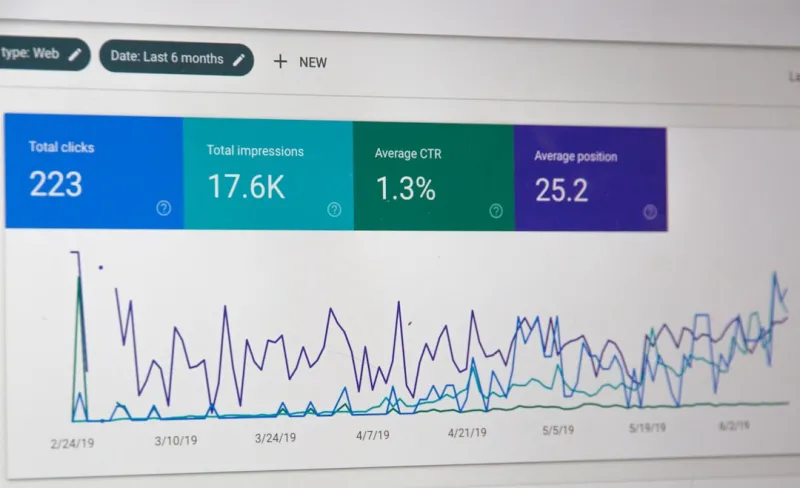
- Answer Panel Impressions: In Search Console’s “Performance → Search features” section you can see how often your site appears in SGE panels.
- Multi‑Turn Click‑Through Rate (CTR): Track the rate at which users click on “Follow‑up” prompts that lead back to your domain.
- Content Engagement Score: Combine average session duration, scroll depth, and video play rate to gauge the “quality” of the experience.
- Entity Trust Score (ETS): A proprietary signal you can infer by monitoring the volume of brand mentions in high‑trust publications and the proportion of those mentions that link back to your site.
When you see a lift in any of these signals, you know the AI is treating your content as a go‑to source—exactly the position you want in a world where clicks are optional.
Preparing for the Future: SGE Meets Other Google Innovations
Google isn’t stopping at SGE. The search giant is also experimenting with “Multimodal Search” (where users combine text and images) and deeper integration of its Gemini model across the ecosystem. The synergy means that a well‑optimized SGE asset can also appear in visual or conversational contexts later on. For SaaS marketers, this underscores the importance of:
- Maintaining a consistent brand voice across text, video, and interactive assets.
- Building a repository of high‑quality, evergreen media that can be repurposed for emerging formats.
- Staying agile: regularly audit your top‑performing pages for new AI‑related optimizations and adjust schema, content depth, and internal linking accordingly.
What Not to Do: Common Pitfalls in the SGE Era
As tempting as it is to chase the new AI hype, there are a few missteps that can actually hurt your SaaS SEO health:
- Keyword‑Stuffing in AI Answers: The generative model penalizes overly repetitive phrasing; keep language natural.
- Neglecting the Classic SERP: Over‑optimizing for SGE at the expense of the traditional ten‑link result leaves you invisible when users still prefer a simple list.
- Ignoring Mobile‑First Indexing: SGE is served across devices; a slow or unresponsive page will be downgraded in the answer panel ranking.
In short, treat SGE as an extension of your existing SEO strategy—not a replacement.
Final Thoughts: Embrace the Dialogue, Not the Monologue
Google’s Search Generative Experience is a reminder that the internet is moving from a repository of static information to a conversational marketplace. For SaaS brands, the opportunity lies in becoming the trusted conversational partner that the AI can rely on. By sharpening entity authority, investing in narrative‑level structured data, and enriching the user experience with high‑quality multimedia, you’ll not only survive the AI‑driven SERP shift—you’ll thrive.

Jimmy Damon loves to right on a large scale of topics with all things Canadian as this Montreal die hard loves hockey. fishing and sports.
Related Posts

Surfing the 2024 Google SEO Tide: Rose DesRochers’ Insider Playbook
Rose DesRochers shares her 2024 SEO playbook, highlighting intent‑first indexing, AI‑human conte... Read More
Navigating the 2024 Google SEO Wave: Intent, AI, and Authority from Rose DesRochers
Rose DesRochers reveals how intent, AI, and authority are reshaping Google SEO in 2024, offering a p... Read More

Why Intent-First SEO Is the Secret Sauce for Modern Google Rankings
Learn why aligning content with user intent is the ultimate SEO lever, how to audit and create inten... Read More
Top Posts

Precision ABM Meets Predictive AI: A New Growth Engine for SaaS Marketers
Learn a step‑by‑step framework for integrating account‑based marketing with AI‑driven predictive scoring, leveraging first‑party data and interactive ...Read More

Turning PWAs into Mobile SEO Powerhouses for SaaS
Progressive Web Apps (PWAs) blend web speed with native app experiences, offering SaaS companies a powerful Mobile SEO advantage. This guide outlines the benefi...Read More

The Hidden SEO Goldmine in User‑Generated Content for eCommerce
User‑generated content isn’t just social proof—it’s a powerful SEO engine. Learn how to harness reviews, Q&A, and community photos to climb the SERPs an...Read More

Turning Facebook Groups into SEO Powerhouses
Learn the untapped SEO potential of Facebook Groups, from keyword‑rich discussions and member backlinks to live video optimization and data‑driven content p...Read More
0 Comments
Post Comment
You will need to Login or Register to comment on this post!