

Why Instant Articles Are the Hidden SEO Engine on Facebook
When most marketers think of Facebook as a social playground, they overlook the fact that every piece of Instant Article you publish lives on a domain that Google can crawl, index, and rank just like any other web page, turning a social feed into a genuine search engine landing page. The moment you enable the Instant Articles format, Facebook creates a lightweight, AMP‑compatible version of your content that loads in a fraction of a second, and that speed alone satisfies one of Google’s core ranking factors, meaning you can win rankings without ever leaving the Facebook ecosystem. In my experience, the combination of lightning‑fast delivery, native mobile rendering, and the ability to embed structured data directly into the article body makes Instant Articles a rare convergence of social reach and technical SEO that most brands still ignore.
Understanding Facebook’s Crawl Budget and Indexing Signals
Facebook runs its own web crawler, called the “Facebook External Link Bot,” which not only fetches the canonical URL of your Instant Article but also extracts Open Graph (OG) metadata, schema.org markup, and even the first 200 characters of body text to feed both Facebook’s internal relevance engine and Google’s index; this dual‑purpose crawling means that every headline, image alt tag, and keyword placement you meticulously craft can ripple through two massive discovery platforms simultaneously. The key to harnessing this power lies in ensuring that the canonical URL you declare in the <link rel="canonical"> tag points back to the original article on your own site, allowing link equity to flow between Facebook and your domain while preventing duplicate‑content penalties; in short, think of the Instant Article as a high‑speed bridge that shuttles users and search bots back and forth. Because Facebook respects the same robots.txt directives you set for your main site, you can fine‑tune which sections of your content library are exposed to the crawler, giving you granular control over the SEO footprint of each Instant Article you publish.
Technical Setup: From CMS Integration to Meta Mastery
Most modern content management systems—WordPress, Drupal, Joomla—offer plug‑ins or native modules that auto‑generate the required Instant Articles XML feed, but the real SEO advantage comes from customizing that feed with precise meta tags, canonical references, and structured data snippets that Google loves; for example, embedding article:author and article:section OG tags not only improves how Facebook displays your post in the feed but also provides Google with clear signals about authorship and topical relevance, which can boost your article’s rank for brand‑related queries. When you map your existing taxonomy to the Instant Articles schema, you create a seamless taxonomy mirroring that can be read by both platforms, allowing you to reuse the same keyword clusters without reinventing your SEO strategy for each outlet. A practical tip: after you publish an Instant Article, run the URL through Facebook’s Sharing Debugger to verify that all OG tags resolve correctly, then drop the same URL into Google’s URL Inspection tool to confirm that Google sees the canonical reference and structured data as intended.
Crafting Content That Serves Both Social Engagement and Search Relevance
Unlike a standard blog post that lives solely on your website, an Instant Article must satisfy two audiences at once—the scrolling social user and the algorithmic search bot—so the headline should be both click‑bait‑worthy and keyword‑rich, embedding primary search terms within the first 60 characters while still sparking curiosity; think of the headline as a dual‑purpose headline that can rank on Google and dominate the Facebook feed. Inside the article, break content into concise, scannable sections with H2 and H3 headings that mirror your site’s silo structure, and sprinkle relevant internal links that point back to pillar pages on your domain, thereby distributing link equity and reinforcing topical authority across both ecosystems. For visual impact, use high‑resolution images with descriptive alt attributes, and consider adding a short video element that Facebook will automatically autoplay in the feed—Google treats video schema just as favorably as text, so you’re essentially scoring double SEO points by marrying rich media with semantic markup.
Leveraging Facebook Engagement as an Indirect SEO Signal
While Google does not directly count likes or shares as ranking factors, the correlation between high engagement on an Instant Article and increased organic traffic is undeniable; a post that garners thousands of comments, reactions, and shares typically experiences a surge in inbound clicks, dwell time, and lower bounce rates—metrics that Google monitors closely when evaluating the relevance and quality of a page. By encouraging readers to comment with specific keywords or to tag friends in discussions, you generate user‑generated content that Google can crawl, effectively turning the comment section into a living, keyword‑rich add‑on that bolsters the article’s topical depth without any extra author effort. Moreover, the social proof displayed on the Instant Article card—such as the number of reactions—can improve click‑through rates from search results, because users tend to trust content that already shows strong community endorsement, creating a virtuous cycle where social signals amplify search visibility.
Cross‑Promotion Strategies: Turning Blog Posts into Instant Articles and Vice Versa
One of the most efficient ways to scale your Facebook SEO game is to repurpose high‑performing blog content as Instant Articles, then embed a call‑to‑action that drives readers back to the full version on your website for deeper engagement, subscription, or conversion; this reciprocal traffic flow signals to Google that both URLs are valuable, while also increasing the time users spend interacting with your brand across platforms. You can further amplify reach by sharing the Instant Article link in relevant Facebook Groups, a tactic explored in depth in turn Facebook groups into search engines, where niche communities often surface content that aligns perfectly with their interests, leading to organic backlinks from group members who reference your article in their own posts. Additionally, embed a “Read on Facebook” button on your blog pages, which not only encourages social sharing but also tells the Facebook crawler that the article is part of a broader content ecosystem, reinforcing the relevance of the instant version in both the social and search contexts.
Measuring Success: From Facebook Insights to Google Search Console
To know whether your Instant Articles are truly driving SEO value, you must adopt a dual‑analytics approach: start with Facebook Insights to track impressions, engagement rates, and click‑throughs from the Instant Article card, then cross‑reference those figures with Google Search Console data for the same canonical URLs, looking for spikes in impressions, average position, and especially the “click‑through rate” (CTR) metric that often improves when social signals boost perceived authority. Setting up UTM parameters on the article’s canonical link allows you to attribute traffic in Google Analytics directly to the Instant Article source, giving you a clear picture of how many visitors are transitioning from the Facebook environment to your site and how they behave once they arrive—key data points for optimizing conversion pathways. Over time, chart these metrics alongside your content calendar to identify which topics, formats, or posting times generate the highest SEO lift, and iterate your strategy based on hard‑data rather than guesswork.
Future‑Proofing Your Facebook SEO with Emerging Formats
As Facebook continues to experiment with AI‑generated content suggestions and native video integrations, the next wave of Instant Articles will likely include dynamic elements such as auto‑summarized sections, interactive polls, and even AR overlays that can be indexed by Google’s evolving visual search capabilities; staying ahead means adopting a flexible template that can accommodate these innovations without breaking your existing SEO framework. For instance, embedding schema.org/VideoObject markup alongside traditional article schema ensures that any video component you add later will automatically be recognized by both Facebook’s feed algorithm and Google’s video carousel, giving you a dual‑placement advantage that few competitors will have mastered. By treating each Instant Article as a modular, future‑ready asset—complete with clean HTML, comprehensive structured data, and a clear canonical link—you create a resilient SEO foundation that can adapt to new social formats while continually feeding valuable, indexable content back to the search engine ecosystem.
Actionable Checklist: Turn Your Instant Articles into SEO Powerhouses
1️⃣ Verify that every Instant Article includes a canonical URL pointing to the original blog post and that the robots.txt file allows Facebook’s crawler access. 2️⃣ Craft headlines that blend primary keywords with compelling social hooks, and use concise, keyword‑rich subheadings to reinforce topic relevance. 3️⃣ Implement full Open Graph and schema.org markup, including author, publication date, and article section tags, to satisfy both Facebook and Google’s indexing needs. 4️⃣ Encourage community interaction by asking readers to comment with relevant terms, turning user‑generated content into additional on‑page SEO text. 5️⃣ Cross‑promote the Instant Article in niche Facebook Groups, leveraging tactics from Facebook SEO potential for brands to amplify reach and attract natural backlinks. 6️⃣ Monitor performance with both Facebook Insights and Google Search Console, adjusting headlines, media, and posting times based on data‑driven insights. By systematically applying these steps, you’ll convert what many view as a mere social publishing tool into a robust, dual‑channel SEO engine that fuels rankings, traffic, and brand authority.

Kris Kennel is a Paralegal outside of Austin, Texas where he spends most of his time helping users with legal matters that concern them. When he is not working he enjoys time with his wife and kids.
Related Posts
Boosting Visibility with Facebook Reels: A Fresh SEO Playbook
Learn to turn Facebook Reels into powerful SEO assets with optimized captions, structured data, cros... Read More
Facebook Video Optimization: How Reels, Stories, and Live Streams Supercharge Your Brand Visibility
Learn how to turn Facebook Reels, Stories, and Live streams into powerful SEO assets by mastering me... Read More

Unlocking Facebook SEO: Turning Social Signals into Search Power
Learn fresh strategies to optimize Facebook for search, from page metadata to Reels transcripts, and... Read More
Top Posts
Headless WordPress SEO Strategies for SaaS Growth
Learn a step‑by‑step, product‑focused approach to decouple WordPress, implement structured data, and automate SEO at scale—unlocking faster load times, ...Read More

Zero‑Click Search Dominance: How to Capture Visibility Without a Click
Zero‑click searches now dominate the SERPs, leaving traditional click‑throughs behind. Learn the tactics to win visibility in rich results, track performanc...Read More
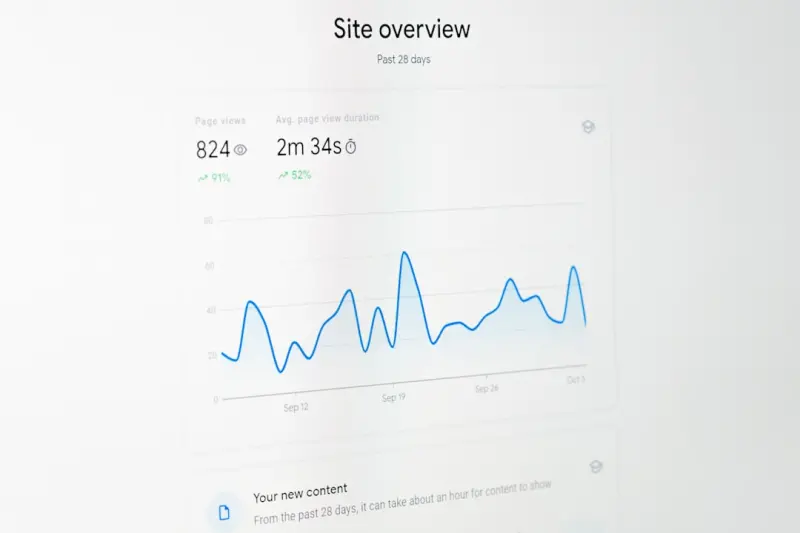
Hyper‑Local SEO: Turning Geographic Intent Into SaaS Growth
Discover a step‑by‑step strategy for SaaS brands to harness hyper‑local SEO, turning geographic intent into higher visibility, more qualified leads, and r...Read More

From Town Halls to Top Rankings: A SaaS Playbook for Event‑Driven Local SEO
Discover a step‑by‑step guide that shows SaaS companies how to leverage community events, structured data, and localized content to dominate the Local Pack ...Read More
0 Comments
Post Comment
You will need to Login or Register to comment on this post!