

Why Google’s Passage Ranking Is the Quiet Game‑Changer SaaS Marketers Have Been Missing
When I first heard “passage ranking,” I imagined Google handing out tiny trophies for the best‑written sentence in a blog post. Spoiler: there’s no ceremony, no gold medals, and definitely no applause. But there is a subtle shift in how the search giant evaluates content, and for SaaS marketers it translates into a fresh set of levers we can pull without rewriting entire pillars.
In this post I’ll walk you through what passage ranking actually does, why it matters more than ever for complex B2B solutions, and how you can weaponize it with tactics that feel almost too easy to be true. By the end, you’ll have a concrete checklist you can hand off to your content team, SEO partner, or even the intern who’s still learning the difference between “keyword” and “keyphrase.”
The Anatomy of a Passage
At its core, passage ranking allows Google to surface a single paragraph—or even a single sentence—inside a longer document that directly answers a query. Think of it as the search engine’s version of “highlighting the best part of a book.” It means that a 2,000‑word whitepaper on “cloud‑based identity management” can rank for a specific long‑tail query like “how to implement MFA for remote teams” without the entire piece needing to be a perfect, one‑to‑one match.
- Granular relevance: Google can now match user intent with a micro‑section of your content, not just the page as a whole.
- Reduced reliance on exact keywords: Synonyms, related concepts, and even contextual clues become more valuable.
- Long‑tail power boost: Niche queries that previously fell through the cracks can now find a home inside comprehensive resources.
For SaaS marketers who often produce deep‑dive guides, case studies, and technical documentation, this is a goldmine. You already have the expertise; you just need to make sure the right passages are discoverable.
Why SaaS Content Is Prime Real Estate for Passage Ranking
Our typical content stack includes:
- Product documentation that can run into tens of pages.
- Thought‑leadership pieces that blend industry trends with how our solution fits in.
- Customer success stories that weave use‑case narratives with data points.
Each of these assets contains multiple “mini‑answers” that can satisfy very specific search intents. The problem is that traditional SEO tactics—optimizing titles, meta descriptions, and headings—only signal relevance at the page level. Passage ranking lets Google surface those mini‑answers directly in the SERPs, driving traffic to pages you might have thought were too broad.
How to Audit Your Existing Content for Passage Opportunities
Before you start creating new assets, take a look at what you already have. Here’s a step‑by‑step audit you can run in a single afternoon:
- Identify high‑performing pages. Pull data from Google Search Console and filter for pages with >500 impressions but <5% click‑through rate (CTR). Low CTR often signals that Google is ranking the page for queries that aren’t well‑matched by the overall content.
- Map query intent to sections. For each under‑performing page, export the “queries” report and manually map the query to a paragraph or subsection that actually answers it. If you can locate a match, you have a passage opportunity.
- Check for thin or duplicate content. Passages that are overly brief (<50 words) or duplicated across multiple pages may be filtered out. Expand or consolidate where needed.
- Tag the passage. In your CMS, add a hidden
<section>tag or anidattribute around the paragraph. This helps internal linking and future audits.
Once you’ve identified the winners, you can start to amplify them.
Crafting Passage‑Friendly Content From the Ground Up
Now that you know how to surface hidden gems, let’s talk about building new content with passages in mind.
- Start with intent clusters. Instead of writing a monolithic “Ultimate Guide to API Security,” break it into distinct intent clusters: “what is API authentication,” “how to implement OAuth 2.0,” “common API security pitfalls,” etc. Each cluster becomes a natural passage.
- Use descriptive sub‑headings. Google still uses
<h2>and<h3>signals. Make them question‑oriented when possible: “How do I secure my SaaS API with rate limiting?” - Keep paragraphs concise. Aim for 2‑3 sentences per paragraph (≈40‑80 words). This improves readability for humans and makes it easier for Google to isolate relevant snippets.
- Include supporting data. A short statistic or a bullet list within a passage can boost its perceived authority. For example, “According to the 2023 Cloud Security Report, 68% of breaches stem from misconfigured APIs.”
Leveraging Structured Data to Highlight Passages
While Google’s passage algorithm works without any markup, pairing it with semantic power for SaaS can amplify visibility. Use the FAQPage and HowTo schemas to surface concise answers directly in rich results. When a passage aligns with a structured data block, the SERP can display both a snippet and a rich card, dramatically increasing click‑through.
Example markup:
<script type="application/ld+json">
{
  "@context": "https://schema.org",
  "@type": "FAQPage",
  "mainEntity": [{
    "@type": "Question",
    "name": "How can I implement multi‑factor authentication for remote teams?",
    "acceptedAnswer": {
      "@type": "Answer",
      "text": "Start by selecting an MFA provider that integrates with your identity platform, then enforce token‑based authentication for all remote logins..."
    }
  }]
}
</script>
This snippet tells Google that the passage is an answer to a specific question, nudging it toward a featured position.
Internal Linking: The Unsung Hero of Passage SEO
Passage ranking doesn’t exist in a vacuum. Internal links that point directly to a paragraph—or at least a section containing it—help Google understand the hierarchy of information. When you link using an #anchor (e.g., /product-security#mfa-implementation), you’re essentially telling the crawler, “Hey, this exact spot matters.”
Here’s a quick checklist:
- Use descriptive anchor text that mirrors the user query.
- Prefer linking to the page itself rather than the whole site, but include the
#idwhen the target passage is deep within a long article. - Audit for broken anchors quarterly.
Measuring Passage Success in Google Search Console
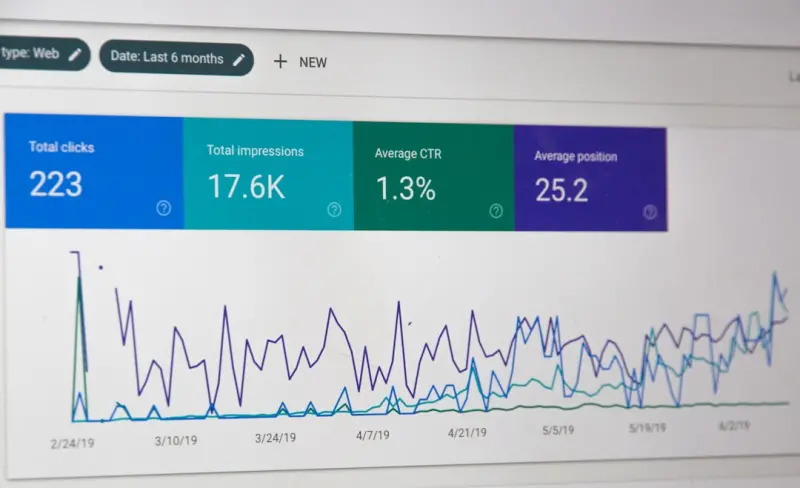
Passage ranking can feel intangible until you see the numbers. In Search Console, look for the “Search appearance” column. If you see “Rich results” or “Top result” spikes for specific queries, you’re likely benefiting from passage matches. Additionally, the “Pages” report now includes a “Average position” metric per query—watch for improvements on long‑tail queries that previously sat on page 5+.
Don’t forget to set up a custom dashboard in Data Studio that tracks:
- Impressions for long‑tail queries.
- CTR uplift after passage‑focused revisions.
- Average position shifts for “FAQ” and “How‑to” queries.
Case Study: Turning a 10‑Page Whitepaper Into a Passage Powerhouse
One of our SaaS clients had a 12‑page whitepaper titled “The Future of Cloud‑Native Identity Management.” It was ranking on page 3 for the broad term “identity management,” but the CTR was a meager 2%.
We performed the audit steps above and identified five high‑value passages that answered specific questions like:
- “What is the difference between SSO and IdP?”
- “How does zero‑trust architecture integrate with existing IAM solutions?”
- “What are the cost implications of moving to a cloud‑native IdP?”
We then:
- Inserted
<h3>headings that mirrored each question. - Added concise, data‑rich paragraphs (≈60 words each).
- Implemented
FAQPagestructured data for each question. - Created internal links from the blog series AI assistant SEO to the specific passages using anchor IDs.
Result?
- Impressions for the targeted long‑tail queries jumped by 180% within two weeks.
- CTR rose to 9% for those queries.
- The whitepaper climbed to position 1 for “zero‑trust identity management cost” and secured a featured snippet for “difference between SSO and IdP.”
All of this without adding a single new page.
Common Pitfalls and How to Avoid Them
- Over‑optimizing with exact match phrases. Passage ranking rewards natural language. Force‑fit keywords and you risk sounding robotic.
- Leaving passages orphaned. If a paragraph is never linked to or referenced elsewhere, Google may not prioritize it.
- Neglecting mobile readability. Users on mobile scroll quickly; ensure passages are scannable and not buried under large images or ads.
- Ignoring updates. Google’s algorithm evolves. Re‑audit passages quarterly, especially after major product releases.
Putting It All Together: A 7‑Day Action Plan
Feeling overwhelmed? Here’s a bite‑size plan you can execute in a week:
- Day 1: Export Search Console data and identify low‑CTR high‑impression pages.
- Day 2: Map queries to specific paragraphs on those pages.
- Day 3: Add descriptive sub‑headings and concise paragraphs where gaps exist.
- Day 4: Implement
FAQPageorHowToschema for the newly refined passages. - Day 5: Create internal anchor links from related blog posts, including a link to the AI assistant SEO article.
- Day 6: Run a quick page‑speed audit to ensure the page loads under 3 seconds on mobile—Google still weighs performance heavily.
- Day 7: Set up a Data Studio dashboard to monitor impressions, CTR, and average position for the targeted queries.
By the end of the week you’ll have transformed a handful of static pages into dynamic, passage‑ready assets that can compete for the niche queries your prospects type into Google’s search box.
Final Thoughts: Embrace the Micro‑Answer Era
Google’s passage ranking isn’t a fad; it’s a logical progression toward satisfying users who want answers now, not a list of links to sift through. For SaaS marketers, the upside is clear: you can leverage existing, high‑quality assets to win new traffic without the heavy lift of creating fresh pages for every long‑tail query.
So the next time you sit down to edit a product guide, ask yourself: “If I were a searcher with a very specific problem, would the answer be right here, in a single paragraph?” If the answer is yes, you’ve just built a passage that could rank on its own.
Happy hunting, and may your snippets be ever relevant.

Becky Putman is an Ottawa-based freelance writer and marketing professional with a passion for storytelling, animals, and community involvement. She enjoys creating engaging content that informs, inspires, and connects with readers.
Related Posts

Surf the 2024 SEO Wave: Rose DesRochers’ Insider Playbook for Intent, AI, and Authority
Rose DesRochers shares a 2024 SEO playbook, blending intent‑first content, AI collaboration, and a... Read More

Why Intent‑First SEO Is the Future of Google Rankings
Explore why Intent‑First SEO is the new cornerstone of Google rankings, learn actionable tactics, ... Read More

Structured Data Strategies to Win Google’s New SERP Features
Learn why structured data is crucial for SaaS SEO, how to implement key schema types, balance crawl ... Read More
Top Posts
Headless WordPress SEO: How to Keep Rankings Soaring in a Decoupled Architecture
A practical guide to preserving and enhancing SEO after migrating WordPress to a headless architecture, covering URLs, schema, performance, and internal linking...Read More

Beyond Keywords: Mastering Google’s Search Experience Signals for SaaS Growth
Google’s ranking algorithm now prioritizes user experience metrics like Core Web Vitals, engagement depth, and SERP interaction. This guide shows SaaS markete...Read More

The On-Page SEO Playbook That Turns User Intent into Ranking Gold
A fresh on‑page SEO guide shows SaaS marketers how to map user intent, layer content for each intent stage, and boost performance with micro‑UX and schema, ...Read More

Interactive Email Marketing: Turning Inboxes Into Live Experiences
Explore the rise of AMP email, design tips, data‑driven personalization, and future AI trends that turn static inboxes into dynamic, revenue‑generating expe...Read More
0 Comments
Post Comment
You will need to Login or Register to comment on this post!