

Turning On‑Page SEO Into a Conversion Funnel
When I first started optimizing SaaS landing pages, I treated keywords like a checklist: find the right terms, sprinkle them in the title, meta, and headings, and call it a day. The traffic came, but the conversion rate stayed stubbornly flat. It was a wake‑up call that on‑page SEO isn’t just about being found—it’s also about moving a prospect from curiosity to commitment.
Why the Traditional “Keyword‑First” Mindset Is Holding You Back
Most on‑page guides still start with the premise “rank for X, Y, Z.” That works for generic blogs, but SaaS products have a multi‑step buyer journey: awareness, consideration, evaluation, and activation. If every page is optimized for the same broad term, you’re essentially feeding every visitor the same message, regardless of where they sit in that funnel.
Imagine a visitor who lands on your pricing page because they typed “best project‑management SaaS.” They’re already past the research phase. If the page still reads like a generic feature list, you’ve missed an opportunity to reinforce the value proposition that aligns with their buying intent.
Mapping Content to Funnel Stages
Start by segmenting your core pages according to the funnel stage they naturally support:
- Awareness: blog posts, industry guides, “what is X?” articles.
- Consideration: comparison tables, case studies, feature deep‑dives.
- Evaluation: free‑trial sign‑up forms, demo videos, pricing calculators.
- Activation: onboarding checklists, implementation guides, support hubs.
Once you’ve grouped pages, each group gets its own on‑page SEO strategy that mirrors the visitor’s mental state.
Step 1: Intent‑Driven Keyword Clustering
Instead of targeting a single “head” keyword per page, build semantic clusters around a core intent. Use tools like AnswerThePublic, Ahrefs’ “Keyword Explorer,” or Google’s “People also ask” (yes, that one we’ve covered elsewhere) to gather long‑tail variations that share the same user goal.
For an awareness page about “project‑management best practices,” you might target:
- how to manage remote teams
- project‑management methodologies comparison
- project‑management software for startups
Then, weave those variations naturally into subheadings, bullet points, and image alt text. The result is a page that answers a broader set of questions, increasing the chance of appearing in passage ranking and featured snippets.
Step 2: Crafting Funnel‑Specific Meta Elements
Meta titles and descriptions are the first touchpoint in the SERP. Tailor them to the funnel stage:
- Awareness – Emphasize educational value: “Learn the 7 Fundamentals of Remote Project Management.”
- Consideration – Highlight comparison: “SaaS Project Management vs. Traditional Tools – Which Wins?”
- Evaluation – Offer a low‑friction CTA: “Start a Free 14‑Day Trial of Our Project‑Management Platform.”
- Activation – Reinforce next steps: “Your First Project Setup Guide – Get Started Today.”
This alignment signals relevance to both users and Google’s AI, which now evaluates E‑E‑A‑T (Experience, Expertise, Authority, Trust) in the context of the searcher’s intent.
Step 3: Structured Data That Matches Funnel Goals
Schema markup isn’t just for reviews or recipes. Use FAQPage and HowTo schema on awareness and consideration pages to surface your answers directly in search results. For evaluation pages, Product and Offer schema can display pricing, trial periods, and availability without a click.
We’ve explored a full structured‑data playbook in another post, which is worth revisiting if you need a refresher: structured data playbook for SaaS. Implementing the right schema at each funnel stage gives Google a clearer signal about the page’s purpose—and can dramatically boost click‑through rates.
Step 4: Internal Linking as a Funnel Engine
Think of internal links as the “conveyor belt” that moves prospects downstream. Here’s a quick framework:
- Contextual anchors that reflect intent. Instead of generic “click here,” use “compare pricing plans” or “watch the demo video.”
- Link depth control. Keep the number of clicks from an awareness page to a trial sign‑up under three. The fewer the hops, the higher the conversion likelihood.
- Link equity distribution. Prioritize high‑authority pages (e.g., your flagship blog posts) to pass link juice to evaluation pages where the conversion action lives.
When you map your internal link architecture this way, you’re not just helping crawlers discover content—you’re actively guiding users toward the next step in the journey.
Step 5: On‑Page UX That Reinforces the Funnel Narrative
Google’s Core Web Vitals are still a ranking factor, but they’re only the baseline. The real UX work happens when you align design elements with the funnel’s psychological triggers:
- Awareness – Use engaging hero images and clear, concise headlines that answer “what’s in it for me?”
- Consideration – Add comparison tables, badge icons for certifications, and social proof that reduces risk perception.
- Evaluation – Place a prominent CTA button (e.g., “Start Free Trial”) above the fold, and support it with a short explainer video.
- Activation – Offer a step‑by‑step checklist or interactive onboarding wizard that reduces friction.
If you’re looking for a deeper dive into how mobile‑only experiences can power SaaS growth, check out mobile‑only SEO strategies. The same principles of speed and clarity apply, but the funnel lens adds a layer of purposeful design.
Step 6: Measuring Funnel‑Focused On‑Page Success
Traditional SEO metrics—organic traffic, keyword rankings—are still important, but they don’t tell the whole story. Add these KPI layers:
- Engagement depth per funnel stage: Average time on page for awareness vs. evaluation pages.
- Conversion path length: Number of internal clicks before a trial sign‑up.
- Micro‑conversion rates: Click‑throughs on internal CTA links, video play percentages, form field completions.
- Behavioral flow in Google Analytics: Visualize how users move from blog posts to product pages.
When you see a drop‑off between the consideration and evaluation stages, it’s a signal to tighten the internal linking or adjust the CTA copy.
Real‑World Example: From Blog to Paid User in 4 Clicks
One of our SaaS clients ran a “remote team productivity” blog series. By mapping each post to the funnel and adding contextual internal links, they achieved the following:
- Awareness – Blog post attracted 12,000 organic visits.
- Consideration – A “download the free productivity checklist” CTA led to a gated resource page (conversion: 18%).
- Evaluation – From the checklist page, an inline “Start your free trial” button captured 5% of those leads.
- Activation – A personalized onboarding email with a step‑by‑step guide turned 42% of trial users into paying customers.
The key was that each on‑page element—title, meta, schema, internal link, UI component—was deliberately aligned with the visitor’s intent at that moment.
Putting It All Together: A Quick Checklist
Use the following cheat sheet when you sit down to optimize any new SaaS page:
- Identify the funnel stage the page serves.
- Build an intent‑driven keyword cluster (3‑5 primary terms, 10‑15 secondary).
- Write a meta title & description that speak directly to that intent.
- Implement schema that reflects the stage (FAQ, HowTo, Product, Offer).
- Design internal links that push the user one step downstream.
- Align UX elements (hero, CTA, visuals) with the psychological trigger of the stage.
- Set up funnel‑specific analytics to track micro‑conversions.
By treating on‑page SEO as a living, moving part of the conversion funnel rather than a static ranking exercise, you’ll see not just more traffic, but more qualified, conversion‑ready visitors.
Final Thoughts
SEO and CRO have long been treated as separate departments—SEO writes the invitation, CRO decorates the party. In reality, for SaaS businesses, the invitation and the party happen on the same page. When you embed funnel logic into every on‑page decision, you give Google and your prospects a clear, unified story: “You’re here, you’re interested, now let’s get you started.” That narrative is what turns clicks into customers.

In the world of freelance writing, where creativity and adaptability are paramount, Michelle Fisher stands out as a dedicated and versatile professional. With a passion for crafting compelling narratives and a keen eye for detail, Michelle has established herself as a trusted voice.
Related Posts

Semantic On‑Page SEO: Structuring SaaS Pages for Search & Conversions
A fresh take on on‑page SEO for SaaS: using semantic structure, proper heading hierarchy, and sche... Read More
Beyond Keywords: Crafting On-Page SEO for SaaS Knowledge Hubs
A deep dive into on‑page SEO for SaaS knowledge hubs, covering intent mapping, structured data, in... Read More

Mapping Search Intent to On‑Page SEO: From Keywords to Content Architecture
Learn to map user intent to your page’s architecture, optimize headings, schema, and internal link... Read More
Top Posts

Intent Clusters: Mapping the Modern Search Journey for Sustainable Rankings
Discover the power of Intent Clusters—a strategic approach to map user journeys, create content hubs, and optimize for diverse SERP features, helping you achi...Read More
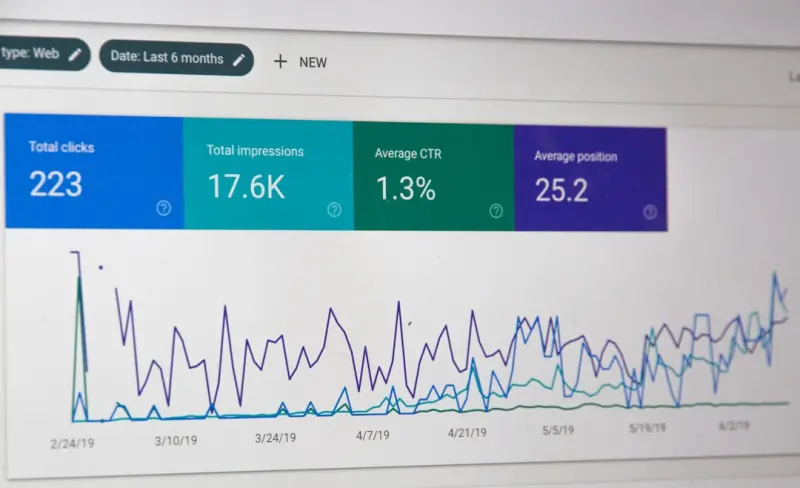
Boost Your WordPress Rankings with Smart Taxonomy Strategies
Learn to transform default categories and tags into powerful SEO assets with custom taxonomies, smart internal linking, and schema markup for WordPress sites....Read More

Mastering Facebook Instant Articles for SEO Success
Learn to leverage Facebook Instant Articles for SEO, from technical setup and content tactics to cross‑promotion and analytics, driving higher rankings and tr...Read More

Beyond the Checkout: Crafting Post‑Purchase Experiences That Turn Buyers into Brand Evangelists
Turn the checkout into the start of a lasting relationship by using a strategic post‑purchase funnel that delights, engages, and converts one‑time buyers in...Read More
0 Comments
Post Comment
You will need to Login or Register to comment on this post!