

Why Google Discover Should Be on Your SaaS SEO Radar
When most marketers think “Google SEO,” the first images that pop up are classic SERP rankings, keyword clusters, and the occasional featured snippet. Yet a massive, constantly updating stream of content lives just outside the traditional results page: Google Discover. For SaaS businesses, Discover is a blind spot that can turn into a high‑velocity lead generator—if you know how to feed the algorithm.
The anatomy of Google Discover
Discover is Google’s AI‑driven feed that surfaces stories, videos, and product updates based on a user’s demonstrated interests, search history, and engagement patterns. Unlike the query‑driven search experience, Discover is interest‑driven. It surfaces content without a user typing a single word, meaning the “keyword” you rank for is effectively the topic relevance the algorithm assigns to your page.
Key signals that drive Discover placement include:
- Freshness: New or recently updated content is favored.
- E‑E‑A‑T: Experience, expertise, authoritativeness, and trustworthiness are amplified in feed contexts.
- Visual appeal: High‑resolution images, compelling thumbnails, and clear alt text.
- Click‑through rates (CTR), dwell time, and bounce metrics feed back into the model.
- Topic relevance: Google’s Knowledge Graph matches content to user interests, often via entity recognition.
Why SaaS brands have an advantage
SaaS companies sit at the intersection of technology, business strategy, and emerging trends—all topics that Google’s Discover users love to explore. From AI‑powered automation to data‑privacy compliance, the ecosystem is rich with story‑worthy angles. Moreover, the SaaS model naturally produces a steady stream of updates—product releases, case studies, industry reports—that satisfy Discover’s freshness requirement.
But the advantage only materializes when you purposefully shape your content to align with the feed’s preferences. That means treating each piece of content as a potential “card” in a user’s personalized news stream.
Building a Discover‑ready content engine
Below is a step‑by‑step framework to turn your existing content pipeline into a Discover‑friendly machine.
1. Identify high‑interest themes via entity mapping
Start with an entity‑centric audit. Entities are the nouns Google’s Knowledge Graph understands—companies, technologies, regulations, and even feelings. Use tools that surface entity frequency and co‑occurrence across your blog archive. Prioritize themes that:
- Show rising search volume (e.g., “generative AI for sales enablement”).
- Align with your product roadmap (e.g., a new integration you’re launching).
- Match the interests of your target buyer personas.
For a deeper dive on entity strategy, see our Entity‑Driven SEO blueprint.
2. Craft “feed‑first” headlines and subheads
Unlike search‑centric headlines that hide the primary keyword early, Discover headlines need to be instantly captivating. Aim for:
- A clear benefit or hook (“How to Cut SaaS Onboarding Time by 40%”).
- A human element (mention a real person, company, or result).
- Under 70 characters to avoid truncation on mobile devices.
Remember, the headline is the first visual cue that determines whether a user taps.
3. Pair each article with a striking, properly sized image
Google recommends 1200 × 628 px images with a 1.91:1 aspect ratio. Use high‑resolution visuals that:
- Clearly illustrate the article’s core idea.
- Contain minimal text overlay (Google can penalize “click‑bait” imagery).
- Include descriptive alt text that mentions the main entity.
When possible, embed a short, auto‑playing video thumbnail (under five seconds). Video thumbnails have been shown to increase CTR on Discover by up to 30%.
4. Optimize for E‑E‑A‑T at the content level
For SaaS, expertise often resides with product managers, engineers, or data scientists. Feature their bylines, bios, and LinkedIn profiles. Add author schema (Article and Person) and a citation section that links to reputable industry reports. This not only bolsters trust for Google but also signals to readers that the content is credible.
5. Leverage structured data beyond the basics
While Article and FAQ schema are staples, consider implementing HowTo markup for tutorial‑style pieces and VideoObject for demo clips. Structured data helps Google understand the content type and often triggers richer cards in Discover feeds.
6. Publish on a cadence that balances freshness with depth
Discover rewards freshness, but it also penalizes thin content. Aim for a weekly cadence of “deep‑dive” articles (1,500–2,500 words) supplemented by “quick‑hit” news or update posts (400–600 words). The deep pieces become authority anchors, while the quick posts keep the feed algorithm noticing you.
7. Monitor performance with the “Discover” report in Search Console
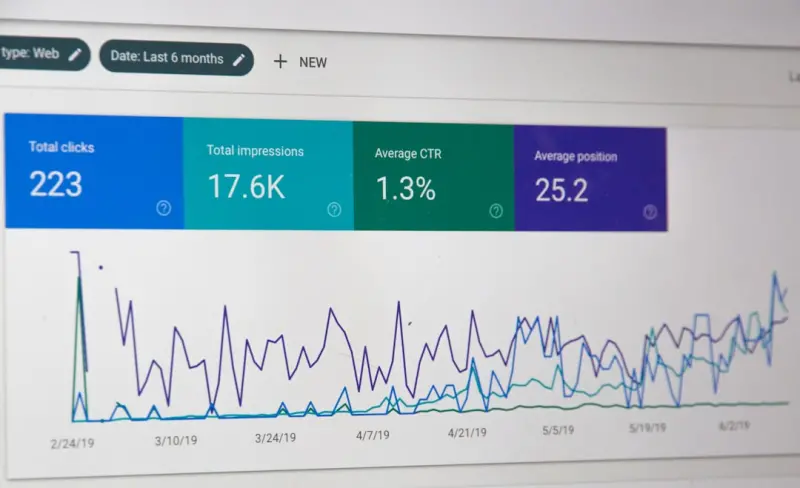
The Discover performance report shows impressions, clicks, CTR, and average position. Track the following KPIs:
- Impression growth week‑over‑week (indicates broader reach).
- CTR above 2% (a strong signal of relevance).
- Dwell time > 30 seconds (suggests engaged readers).
Iterate on headlines and images for any under‑performing cards—small tweaks can lift CTR dramatically.
Case study: From zero to 12 K monthly Discover impressions
One mid‑size SaaS platform specializing in workflow automation decided to test the framework above. Their baseline Discover traffic was non‑existent. Over a 90‑day period they:
- Mapped 25 high‑interest entities (e.g., “no‑code automation”, “AI‑driven workflow”).
- Created 12 “feed‑first” blog posts, each paired with a custom graphic.
- Applied
HowToandVideoObjectschema to five of the posts. - Promoted each article on LinkedIn to boost early engagement signals.
The results:
- ~8,500 Discover impressions in the first month, climbing to 12,300 by week 12.
- Average CTR of 3.2%, beating their organic search average of 2.1%.
- Lead conversion rate from Discover traffic of 1.4%, comparable to paid acquisition cost.
This experiment proved that a systematic, entity‑driven approach can unlock a high‑quality traffic source that many SaaS marketers overlook.
Integrating Discover with broader AI‑driven SEO tactics
Discover does not exist in a vacuum. Its AI engine shares signals with Google’s generative search features, such as the AI‑enhanced snippets you see in the main SERP. By aligning your content strategy across both channels, you create a “signal amplification loop.” For example, a well‑structured How‑To article that ranks for a featured snippet can also be repurposed as a Discover card, feeding the same entity signals back to the search index.
Our recent deep dive on AI Search Unleashed outlines how multi‑modal signals—text, image, and video—interact across Google’s ecosystem. Apply those principles to Discover: the same high‑quality visuals and concise metadata that boost snippet visibility will also improve feed performance.
Common pitfalls and how to avoid them
- Over‑optimizing for clicks: Click‑bait headlines may boost initial CTR but lead to high bounce rates, causing Google to downgrade the content. Keep promises honest.
- Neglecting mobile speed: Discover is predominantly consumed on mobile. Ensure your pages load under 2 seconds on 3G/4G connections.
- Ignoring user feedback: Monitor comments, social shares, and direct feedback. If a piece sparks conversation, expand it into a series or a video tutorial.
- One‑size‑fits‑all imagery: Using generic stock photos dilutes relevance. Invest in custom graphics that reflect your brand’s data‑driven aesthetic.
Future outlook: Discover as a lead‑generation hub
Google continues to blur the lines between search, feed, and AI‑generated answers. As the model matures, we can expect deeper personalization—meaning that the same piece of content could appear to a CFO in one region and a product manager in another, each with tailored headlines and images. For SaaS marketers, this presents a scalable way to surface product‑specific use cases without paying for multiple ad campaigns.
To stay ahead, treat Discover as a dynamic, data‑driven channel. Regularly audit your entity map, refresh visuals, and iterate on headlines based on real‑time performance. When done right, Discover can become a steady stream of high‑intent traffic that feeds directly into your free‑trial funnel, demo requests, and ultimately, subscription revenue.
Action checklist for SaaS marketers
- Run an entity audit of your existing content library.
- Identify 10 high‑potential topics with rising interest.
- Produce a “feed‑first” article for each, complete with a custom 1200 × 628 px image.
- Implement
Article,HowTo, andVideoObjectschema where appropriate. - Publish on a weekly cadence, alternating deep dives and quick updates.
- Track Discover performance in Search Console and iterate on low‑CTR cards.
- Cross‑link Discover articles to related product pages and nurture emails.
By embedding these practices into your SEO workflow, you’ll turn Google Discover from a mysterious side‑effect into a predictable, high‑value acquisition channel.

Tom Ferguson is a Canadian freelance writer with a passion for storytelling, current events, and thoughtful commentary. Drawing on years of writing experience, he shares engaging insights on a wide range of topics, bringing a uniquely Canadian perspective to his work.
Related Posts

Beyond Keywords: Mastering Google’s Search Experience Signals for SaaS Growth
Google’s ranking algorithm now prioritizes user experience metrics like Core Web Vitals, engagemen... Read More

Cracking the Zero‑Click Code: Own Google’s Answer Boxes
Zero‑click searches are reshaping organic traffic. This guide shows SaaS marketers how to optimize... Read More

Google SEO in 2024: Rose DesRochers’ Insider Playbook for Dominating the SERPs
Rose DesRochers reveals the 2024 SEO playbook, blending AI, contextual ranking, and performance tact... Read More
Top Posts

Zero‑Result SERPs: How to Win When Users Don’t Click
Zero‑result SERPs are reshaping search visibility. This article explains how SaaS marketers can optimize content, leverage markup, and earn authority to domin...Read More

Winning the New SERP Real Estate: A B2B SaaS Guide to Featured Snippets, Answer Boxes, and Beyond
The SERP has evolved into a multi‑dimensional stage. Learn practical strategies for B2B SaaS marketers to win featured snippets, AI‑generated answer boxes, ...Read More
Technical SEO for SaaS: Tackling Duplicate Content in Multi‑Tenant Platforms
A deep dive into the hidden duplicate content challenges of multi‑tenant SaaS platforms and actionable steps to resolve them for stronger organic rankings....Read More

Building a Knowledge Hub: A Fresh SEO Playbook for B2B SaaS
Learn to transform your SaaS content into a powerful knowledge hub that boosts rankings, engages prospects, and fuels conversions with actionable SEO strategies...Read More
0 Comments
Post Comment
You will need to Login or Register to comment on this post!