

Why Headless CMS is the Next Frontier for Technical SEO
When I first started dabbling in technical SEO, the biggest challenge was reconciling content flexibility with search engine requirements. Today, the conversation has shifted from monolithic CMS platforms to headless architectures. If you’re building or migrating a SaaS product, the decision to go headless isn’t just a developer’s convenience—it’s a strategic SEO move.
The Core Tension: Decoupled Front‑Ends vs. Crawlability
In a traditional CMS, the front‑end and back‑end are tightly coupled. The server renders the final HTML, and search bots crawl the same markup that users see. Headless CMS flips that model: the back‑end delivers raw content via APIs, while a separate front‑end (React, Vue, Svelte, etc.) assembles the page on the client.
This separation brings two immediate technical SEO questions:
- How will Google see the content? If the front‑end relies heavily on JavaScript, bots might miss critical text, schema, or internal links.
- Can we preserve crawl efficiency? Decoupled architectures often introduce extra round‑trips, redirects, or fragmented URLs that can waste crawl budget.
Answering these questions requires a fresh set of tactics—many of which are still under‑documented in mainstream SEO guides.
Rendering Strategies That Keep Bots Happy
Google’s rendering pipeline has evolved, but it still favors server‑side rendered (SSR) content for reliability and speed. Here are three rendering patterns you can adopt with a headless stack:
1. True Server‑Side Rendering (SSR)
Render the full HTML on the server before sending it to the browser. Frameworks like Next.js or Nuxt.js make this approachable. Benefits include:
- Instant access to content for crawlers.
- Lower Cumulative Layout Shift (CLS) scores, which indirectly influence rankings.
- Consistent URL structures that avoid duplicate content.
2. Hybrid Rendering (SSR + CSR)
Serve a minimal HTML shell with critical SEO elements (title, meta description, structured data) and let JavaScript hydrate the rest. This hybrid model offers a good compromise for SaaS dashboards that need rich interactivity after the initial load.
3. Static Site Generation (SSG)
Pre‑build pages at deploy time using content fetched from the headless CMS. Tools like Gatsby or Hugo can generate thousands of static pages that are instantly cacheable at the edge. SSG is especially powerful for marketing sites, documentation, and blog sections where content changes predictably.
Managing Crawl Budget in a Decoupled World
One of the hidden pitfalls of a headless approach is unintentionally bloating your site’s URL space. Dynamic routes, query strings, or API endpoints that expose HTML can confuse crawlers. Here’s how to stay lean:
- Canonical Tags: Ensure every page points to a single, preferred URL. This prevents duplicate content penalties.
- Robots.txt Hygiene: Disallow any API routes that return HTML but aren’t meant for indexing (e.g.,
/api/v1/preview). - Sitemap Discipline: Generate XML sitemaps directly from the CMS’s content model, not from the front‑end router.
For a deeper dive into crawl‑budget optimization, check out Log‑File Mastery: Unlocking Crawl Budget for SaaS Growth. Analyzing server logs will reveal which URLs bots actually request and where they get stuck.
Structured Data Without a Monolith
In a headless setup, JSON‑LD snippets are often injected client‑side. While Google can parse JSON‑LD added via JavaScript, it’s safer to embed the markup in the SSR or SSG phase. This ensures:
- Immediate visibility in Search Console’s Rich Results test.
- Consistent rendering across Googlebot Desktop, Mobile, and the new Passage Indexing models.
When you control the rendering pipeline, you can pull schema definitions straight from your CMS’s content types, keeping data integrity intact across languages and locales.
Performance at the Edge: CDNs, HTTP/3, and Core Web Vitals
Headless architectures naturally pair with edge networks. By pushing static assets and pre‑rendered HTML to a CDN, you reduce latency for users and bots alike. Here are three performance levers you should fine‑tune:
Edge Caching of API Responses
Cache API responses that deliver content fragments (e.g., product descriptions). Use cache‑control headers to set appropriate TTLs. This reduces origin load and speeds up SSR rendering.
Adopt HTTP/3 and QUIC
Modern browsers and Googlebot are already speaking HTTP/3. Enabling it on your edge nodes can shave milliseconds off the TLS handshake and improve overall throughput—an often‑overlooked factor in Core Web Vitals.
Lazy‑Load Non‑Critical Resources
Only render above‑the‑fold content in the initial HTML payload. Defer images, scripts, and secondary widgets. Tools like IntersectionObserver and loading="lazy" help keep LCP low without sacrificing UX.
International SEO in a Headless Context
Many SaaS products serve a global audience, and a headless CMS gives you the flexibility to store translations as separate entries or as nested fields. The key is to keep hreflang implementation server‑side so search engines can discover language versions without executing JavaScript.
Steps to follow:
- Generate language‑specific URLs (e.g.,
/en/,/fr/). - Include
<link rel="alternate" hreflang="x">tags in the SSR output. - Submit localized sitemaps to Google Search Console.
Testing and Validation: From Log Files to Real‑User Monitoring
Technical SEO is an iterative discipline. After you roll out a headless migration, monitor these signals:
- Google Search Console Coverage: Look for “Submitted URL not found (404)” or “Submitted URL blocked by robots.txt”.
- Log‑File Analysis: Spot crawling anomalies, such as bots repeatedly requesting API endpoints that return HTML. Again, Log‑File Mastery offers a practical workflow.
- Real‑User Metrics (RUM): Use tools like Web Vitals or Lighthouse CI to catch LCP, FID, and CLS regressions before they affect rankings.
Case Study: A SaaS Marketing Site Goes Headless
Let’s walk through a fictional (but realistic) scenario:
- Baseline: The site ran on a traditional CMS, with a monolithic theme that loaded all JavaScript bundles on every page. Core Web Vitals were borderline, and the blog’s crawl budget was spread thin across duplicate pagination URLs.
- Migration: The team adopted a headless CMS (Contentful) and rebuilt the front‑end with Next.js SSR. They generated a static version of every blog post at build time, while the product pages used SSR to pull dynamic pricing data.
- SEO Adjustments:
- Canonical tags were auto‑generated from the CMS content model.
- All JSON‑LD was inserted during the SSR step.
- Robots.txt was updated to disallow
/preview/and/api/paths.
- Results (90‑day window):
- LCP dropped from 3.2 s to 1.8 s.
- Organic traffic grew 22 %.
- Crawl budget usage improved: the number of “Crawl Errors” fell by 78 %.
This example underscores that a headless migration isn’t a SEO gamble—when paired with intentional technical tactics, it can be a growth engine.
Bridging the Gap: Collaboration Between Developers and SEOs
Technical SEO success with headless CMS hinges on cross‑functional communication. Here are five practices to embed SEO into the development workflow:
- Schema‑First Content Modeling: Define structured data fields in the CMS before building the front‑end.
- SEO‑Driven Build Scripts: Include a step that validates each generated page for missing meta tags or broken internal links.
- Feature Flags for SEO Experiments: Deploy changes to a subset of users (or bots) and monitor impact before a full rollout.
- Continuous Integration (CI) Checks: Run Lighthouse CI on every pull request to catch regressions early.
- Documentation Handoff: Maintain a living SEO checklist inside the repo’s README, so future developers inherit the knowledge.
Future‑Proofing: How Emerging Web Standards Influence Headless SEO
We’re on the cusp of several standards that will reshape the technical SEO landscape:
- WebAssembly (Wasm): Allows heavy computations (e.g., image optimization) to run client‑side without slowing down the main thread, preserving performance metrics.
- Component‑Driven Architecture (e.g., Web Components): Enables reusable SEO‑friendly modules that can be dropped into any front‑end framework, keeping markup consistent.
- Search‑Engine‑Generated Pre‑Rendering Services: Google’s “Indexing API” may eventually let you submit raw JSON for rendering on Google’s servers, bypassing client‑side execution concerns altogether.
Staying aware of these trends ensures your headless setup remains adaptable, and your SEO foundation won’t become obsolete.
Takeaways for SaaS Marketers and Engineers
Summarizing the most actionable points:
- Prefer SSR or SSG for SEO‑critical pages; reserve CSR for highly interactive user dashboards.
- Keep crawl budget tight by canonicalizing, cleaning robots.txt, and generating focused sitemaps.
- Inject structured data during server rendering, not via client‑side scripts.
- Leverage edge caching, HTTP/3, and lazy loading to win Core Web Vitals.
- Integrate SEO checks into CI pipelines and maintain a shared checklist between developers and SEOs.
By treating your headless CMS as an SEO asset rather than a mere content delivery mechanism, you unlock a competitive edge that resonates throughout the entire marketing funnel.
Further Reading
If you’re curious about related technical SEO challenges, you might also explore how progressive web apps impact rankings in Why Progressive Web Apps Demand a New Technical SEO Playbook. The concepts of caching, service workers, and offline availability share many parallels with the edge strategies discussed above.

Tracie Higgins, a professional content writer, produces captivating content. In her leisure time, away from work and travel, she loves to spend time with her grandson.
Related Posts

Decoding the SEO Challenges of API‑First SaaS Architectures
A deep dive into the unique SEO hurdles faced by API‑first SaaS products, offering actionable step... Read More
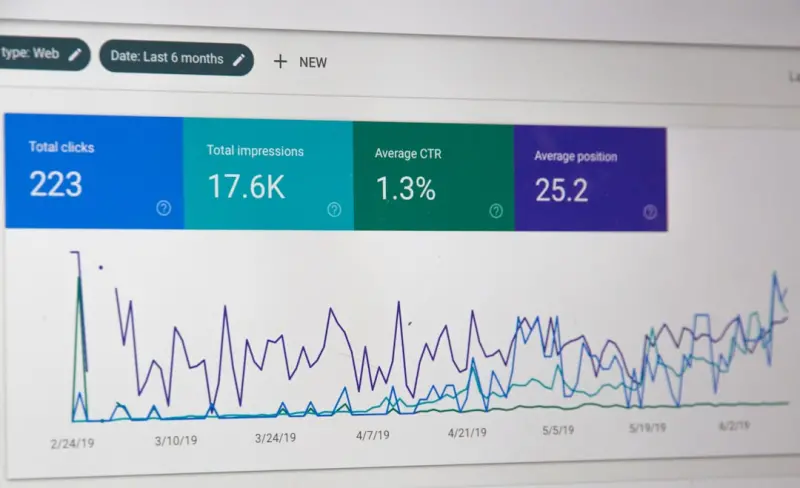
Mastering Crawl Budget: Technical SEO Strategies for Scaling SaaS Platforms
A deep dive into crawl budget optimization for SaaS websites, covering practical tactics, automation... Read More
Unlocking the Hidden Power of Server Log Analysis for SaaS Technical SEO
Server logs reveal exactly how search engines interact with your SaaS platform. By analyzing these r... Read More
Top Posts

Turning Live Streams into Shopping Engines: A Playbook for Modern eCommerce
Live streaming is reshaping eCommerce. This playbook reveals the tech stack, data‑driven storytelling, and post‑broadcast tactics to turn real‑time video ...Read More

AI‑Powered Creative Lab: Reinventing SEM for SaaS in a Cookieless Era
The post outlines a four‑stage AI‑Powered Creative Lab—signal aggregation, dynamic asset generation, automated bidding, and rapid experimentation—offeri...Read More

Why Progressive Web Apps Are the Secret Sauce for Mobile SEO Success
Progressive Web Apps combine the best of web and native app experiences, delivering speed, offline access, and push notifications that improve mobile SEO signal...Read More

Turning Interactive Experiences into Sustainable SaaS Leads
Interactive content transforms passive browsers into active participants, delivering richer intent data and higher conversion rates. Learn how SaaS companies ca...Read More
0 Comments
Post Comment
You will need to Login or Register to comment on this post!