

Why the Latest Google Algorithm Isn’t Just Another Update
When Google rolls out a new algorithmic tweak, most marketers scramble for a checklist: Did my keyword density drop?Are my backlinks still gold?Do I need to rewrite the title tags? The reality is far richer—and far more strategic. The current wave of changes isn’t about surface‑level adjustments; it’s a re‑orientation toward contextual relevance, real‑time freshness, and demonstrable expertise. For SaaS companies, that translates into a fresh set of levers that can turn a modest blog post into a traffic engine, and a technical doc page into a ranking powerhouse.
The “Passage Indexing” Paradigm Shift
Google’s passage indexing, first hinted at in the Passage Ranking Update, allows the search engine to surface specific sections of a page that directly answer a query, even if the broader page isn’t an obvious match. Think of your long‑form whitepaper on “cloud security compliance”—Google can now surface the paragraph that discusses “SOC 2 audit timelines” without the reader having to land on the whole document.
This is a game‑changer for SaaS marketers because it means:
- Depth over breadth: Instead of cramming every keyword onto a single landing page, you can let each well‑structured section shine on its own.
- Reduced cannibalization: Multiple sections of the same resource can rank for different long‑tail queries, expanding your SERP real estate.
- Higher user satisfaction: Users land directly on the answer they need, decreasing bounce rates and boosting dwell time—both indirect ranking signals.
To harness passage indexing, focus on semantic headings, concise paragraph introductions, and clear answer statements. Your content architecture should feel like a series of mini‑articles stitched together, each with its own <h2> or <h3> that signals the core topic to Google’s crawlers.
Elevating E‑E‑A‑T: Experience Joins the Equation
Google’s long‑standing E‑A‑T framework (Expertise, Authority, Trust) has officially been upgraded to E‑E‑A‑T, inserting Experience as a fourth pillar. For SaaS, experience is quantifiable: case studies, product demos, user‑generated video walkthroughs, and even live‑chat transcripts can serve as proof that your team has “been there, done that.”
Practical ways to embed experience into your SEO assets:
- Showcase real‑world implementations: Embed a “Success Snapshot” box within product pages, highlighting metrics (e.g., “Reduced churn by 12% in 90 days”).
- Leverage your API documentation: As discussed in API docs as SEO superpower, detailed code samples paired with use‑case narratives demonstrate hands‑on expertise.
- Invite guest experts: A short interview with a CTO from a flagship client can act as a third‑party endorsement, boosting authority.
Remember, Google’s evaluators are looking for signals that the content creator has actually applied the knowledge, not just studied it. Embedding experience builds credibility and aligns directly with the new algorithmic focus.
Real‑Time Freshness Signals: The “Freshness Decay” Curve
Historically, Google treated freshness as a binary—either a page was fresh or it wasn’t. The new algorithm introduces a “decay curve” that evaluates how the relevance of a piece of content diminishes over time, but also how quickly you can revive it. This is especially pertinent for SaaS topics that evolve rapidly: regulatory changes, new feature releases, and emerging security threats.
To keep your content from sliding down the decay curve:
- Implement a “content health” calendar: Schedule quarterly reviews for cornerstone pieces, updating stats, screenshots, and references.
- Publish “rapid‑response” micro‑updates: When a new GDPR guideline drops, add a 150‑word “What’s New” section at the top of your compliance guide.
- Leverage schema for versioning: Use
Articleschema with adateModifiedproperty to signal the exact moment you refreshed the content.
Google’s freshness model rewards the signal of a recent edit more than the edit itself. So even a concise, well‑crafted update can give your page a noticeable boost.
Semantic Search and the Rise of “Topic Clusters” 2.0
The algorithm’s growing reliance on natural language models means it can understand the intent behind a query, not just the exact phrasing. While topic clusters have been a staple of SaaS content strategy, the latest algorithmic nuance demands a more granular approach: cluster sub‑themes.
For instance, a broad cluster around “customer onboarding” could be broken into sub‑themes like “self‑service onboarding,” “onboarding analytics,” and “onboarding best practices for SMBs.” Each sub‑theme should have a dedicated landing page that interlinks with the core pillar, creating a dense semantic web that Google can easily parse.
Key tactics:
- Map out entity relationships using tools like Entity SEO to identify which concepts naturally co‑occur.
- Craft concise, answer‑focused
<title>tags that incorporate the sub‑theme phrase. - Use internal linking with descriptive anchor text that reinforces the semantic hierarchy (e.g., “Explore self‑service onboarding metrics”).
AI‑Generated Content: From Risk to Opportunity
Google’s stance on AI‑generated content has shifted from “penalize low‑quality output” to “reward value‑first writing.” The algorithm now evaluates AI‑assisted pieces on the same criteria as human‑written content: factual accuracy, depth, and user satisfaction metrics.
Here’s how to integrate AI responsibly:
- Use AI for research, not final copy: Let the model generate outlines, data summaries, or code snippets, then have a subject‑matter expert edit for nuance.
- Maintain transparency: If a blog post includes AI‑generated sections, consider a brief disclosure. Trust signals matter for E‑E‑A‑T.
- Focus on originality: Combine AI‑generated insights with proprietary data (e.g., internal benchmark reports) to create content Google can’t find elsewhere.
When done right, AI can accelerate content production without sacrificing the authenticity that the new algorithm prizes.
Link Equity in a Passage‑Driven World
Traditional link‑building still matters, but the way Google distributes link equity has subtly shifted. With passage indexing, a single inbound link can now benefit multiple sub‑topics within the target page, provided the anchor text is contextually relevant to those passages.
Strategic moves:
- Secure topic‑specific backlinks—instead of a generic “software solutions” link, aim for “SaaS onboarding analytics” from a data‑focused blog.
- Encourage anchor‑rich internal links that point to precise sections using hash fragments (e.g.,
example.com/onboarding#analytics). - Leverage authoritative guest posts that naturally embed a link to a relevant passage within your pillar content.
These practices amplify the ripple effect of each backlink, aligning with Google’s passage‑centric ranking logic.
Measuring Success: Beyond Rankings
With the algorithm emphasizing user experience, traditional KPI’s like “organic traffic” are no longer sufficient. SaaS marketers should incorporate:
- Engaged time on passage: Use heat‑map tools to see how long users stay on a specific section.
- Conversion alignment: Track whether users who land on a passage (e.g., “Free trial setup guide”) progress to a trial signup.
- Search satisfaction score: Monitor metrics like “bounce rate from SERP” and “return visits” for specific queries.
These data points provide a more holistic view of how the algorithm’s nuanced signals translate into real business outcomes.
Action Plan: 7 Immediate Steps for SaaS Teams
- Audit existing long‑form assets for passage opportunities. Add clear sub‑headings and concise intro sentences for each section.
- Update E‑E‑A‑T signals. Add client logos, testimonial snippets, and “experience” boxes to high‑value pages.
- Implement a freshness schedule. Flag any content older than six months for a quick stats refresh.
- Refine topic clusters. Break down pillars into sub‑themes and map internal links accordingly.
- Integrate AI responsibly. Use it for data aggregation, then hand‑off to experts for final copy.
- Target passage‑specific backlinks. Pitch guest posts that naturally link to a distinct section of your content.
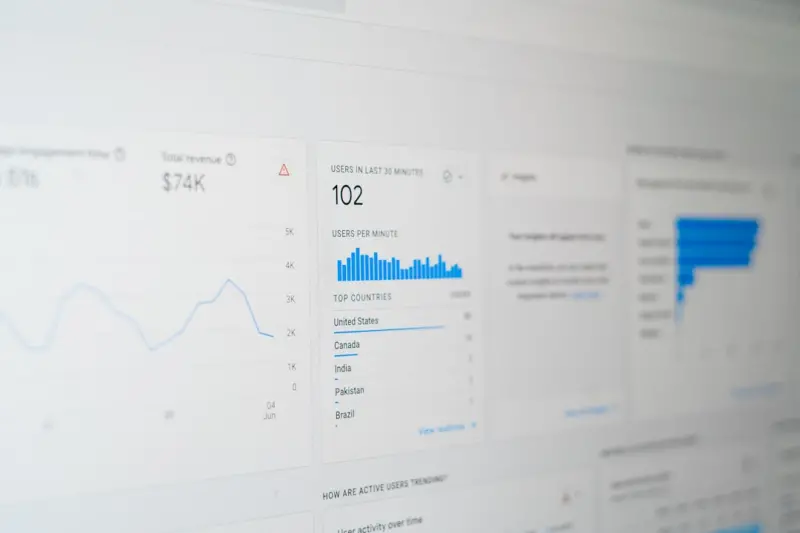
- Set up new analytics dashboards. Track passage dwell time, conversion flow, and SERP satisfaction.
Executing this roadmap will position your SaaS brand not just to survive the latest algorithm, but to thrive in a landscape where relevance, experience, and freshness reign supreme.
Looking Ahead: The Next Wave of Algorithmic Evolution
While we can’t predict the exact nature of Google’s next update, the trajectory is clear: deeper contextual understanding, tighter integration of user intent, and a relentless focus on real‑world experience. SaaS marketers who embed these principles into their content DNA will find themselves ahead of the curve, turning algorithmic shifts into sustainable growth.

Kris Kennel is a Paralegal outside of Austin, Texas where he spends most of his time helping users with legal matters that concern them. When he is not working he enjoys time with his wife and kids.
Related Posts

Why Google’s Freshness Algorithm Matters More Than Ever
Google’s freshness algorithm can make or break your rankings. In this guide, I reveal why recency ... Read More

Cracking Google’s Passage Ranking: A Playbook for Long‑Form Content Success
Discover why Google’s passage ranking reshapes long-form SEO and how to structure, optimize, and m... Read More

Cracking Google’s Passage Ranking: How Sub‑Section Targeting Can Boost Your Rankings
Google’s passage ranking transforms content evaluation. Learn to structure, tag, and write for sub... Read More
Top Posts
Why Visual Search Is the Next SEO Frontier for SaaS
Visual search is rapidly becoming a core SEO signal for SaaS products. This post explains why image optimization, structured data, and user‑generated visuals ...Read More

Collaborative Research: A Fresh Path to High‑Quality Link Building
Explore a new link‑building strategy that leverages academic collaborations and open‑source contributions to generate lasting, high‑quality backlinks and ...Read More

Beyond Acquisition: SEO Tactics for SaaS Customer Retention
Learn how to repurpose support articles, renewal FAQs, and community forums into SEO assets that not only attract new users but also drive higher retention and ...Read More

Technical SEO for Headless SaaS: Indexability, Performance, and Structured Data
A deep dive into technical SEO for headless SaaS platforms, covering rendering strategies, edge caching, log file analysis, structured data, and future‑proof ...Read More
0 Comments
Post Comment
You will need to Login or Register to comment on this post!